
Are you struggling to make sense of your organization’s data? Do you wish there was a way to ensure that your information is reliable, secure, and insightful? This is where combining data governance and data analytics comes into play. To make the most of your data, you need a detailed strategy to ensure quality, security, and efficient management.
Data analytics is not just a buzzword — it’s a rapidly evolving discipline transforming industries. According to Grand View Research, the global data analytics market size was valued at $49.03 billion in 2022 and is projected to grow at a CAGR of 26.7% from 2023 to 2030. This remarkable growth underscores the increasing reliance on data-driven decision-making in the modern business landscape.
Equally important is data governance. It ensures data accuracy, consistency, and accessibility, which are essential for trustworthy analytics. Forbes reports that 83% of business leaders consider data a critical component of their business strategy. Without strong governance, even the most advanced analytics tools can produce unreliable insights.
Let’s dive into the ultimate guide to data governance and data analytics — and explore how you can turn your organization’s data into a powerful business asset.
What is a Data Governance Framework?
Ever wondered how organizations manage their vast amounts of data efficiently? That’s where data governance — the backbone of any data management strategy — comes in.
Data governance (DG) is the process that ensures the availability, integrity, and security of data across an organization’s systems. It defines how data is collected, stored, managed, and used responsibly.
According to the Data Governance Institute (DGI), a data governance framework is a blueprint that ensures your data is accurate, accessible, and secure. It comprises processes, roles, standards, and metrics to maintain high-quality, compliant, and well-protected data assets.
Why a Data Governance Framework is Essential
For enterprises managing large volumes of data, a well-structured data governance strategy is vital. It helps establish policies and standards from the start — ensuring consistent terminology, accountability, and compliance. A solid DG framework outlines ownership, assigns responsibilities, and provides a roadmap for critical business use cases.
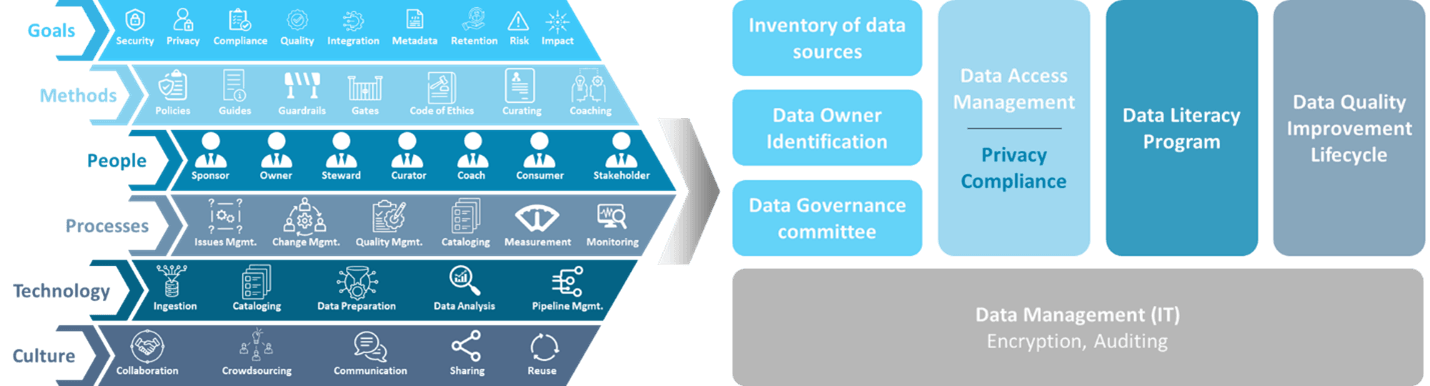
Key Objectives: Maintain data quality, security, and integrity. Quality data ensures accuracy and reliability; security safeguards data from unauthorized access; integrity ensures data remains consistent across its lifecycle.
Roles Involved: Data stewards enforce data policies and maintain data quality. The data governance committee — comprising cross-departmental stakeholders — defines governance rules and resolves data-related challenges.
Components: Policies, procedures, and standards form the foundation. Policies define data rules, procedures specify steps to implement them, and standards set benchmarks for quality and compliance.
Building a Data Governance Framework
Step 1: Assess the Current State – Data Inventory and Gap Analysis
Start with a comprehensive data inventory. Identify where data resides, how it’s used, and who can access it. Conduct a gap analysis to pinpoint weaknesses and define areas for improvement.
Step 2: Define Goals and Objectives Aligned with Business Strategy
Align your DG goals with organizational objectives. For example, if improving customer satisfaction is a priority, set a goal to increase data accuracy and accessibility by 20% within a year.
Step 3: Develop Roles, Responsibilities, and Security Protocols
Assign data stewards and define ownership. Implement access controls, data encryption, and regular security training to ensure compliance and protection.
Step 4: Implement and Monitor the Framework
Execute your governance processes using tools, documentation, and training. Continuously monitor and refine your DG framework through metrics, feedback, and regular audits.
Foundations of Data Analytics
Data analytics enables organizations to extract meaningful insights, improve decision-making, and enhance operational performance. It transforms raw information into actionable intelligence.
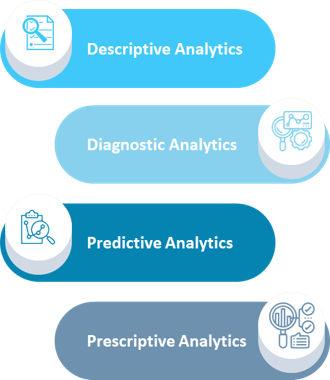
- Descriptive Analytics: Answers “What happened?” by summarizing past trends and patterns.
- Diagnostic Analytics: Explains “Why did it happen?” through data correlation and root-cause analysis.
- Predictive Analytics: Uses models and AI to predict “What could happen?” in the future.
- Prescriptive Analytics: Recommends “What should we do?” using advanced algorithms for optimal outcomes.
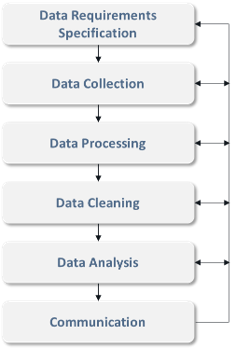
- Data Collection: Gather relevant data from internal and external sources.
- Data Cleaning: Remove inconsistencies and errors to ensure reliability.
- Data Transformation: Standardize and reformat data for analysis.
- Data Modeling: Apply statistical or machine learning models to detect trends and patterns.
- Data Visualization: Use charts and dashboards to communicate insights clearly.
Intersection of Data Governance and Data Analytics
Boosting Analytics with Governance
Data governance ensures analytics outcomes are reliable by improving data quality, accuracy, and consistency. Without it, analytics can produce misleading insights.
Data Quality and Integration
By enforcing consistent data quality standards, governance simplifies data integration from multiple sources — enabling seamless analytics across systems.
Ensuring Data Lineage and Transparency
Governance tracks data lineage — where it originates, how it moves, and how it transforms — ensuring transparency and auditability in analytics.
Effective Data Management
Proper governance ensures data is organized, accessible, and easy to analyze — improving collaboration and productivity across departments.
Regulatory Compliance
Governance enforces adherence to data regulations (GDPR, CCPA, HIPAA), reducing risks and ensuring ethical analytics practices.
Practical Implementation of Data Governance in Analytics
| Key Steps | Description |
|---|---|
| Setting Guidelines for Data Usage Consistency |
|
| Reducing the Risk of Flawed Decision-Making |
|
| Enhancing Cross-Department Collaboration |
|
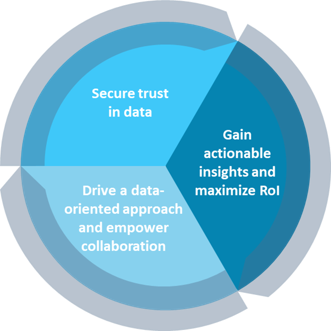
By following these steps, organizations can implement data governance effectively within their analytics framework — improving accuracy, compliance, and collaboration.
Parting Thoughts
Integrating data governance with data analytics is essential for any organization aiming to leverage data as a strategic asset. By ensuring quality, security, and integrity, you can extract meaningful insights and make data-driven decisions that fuel business growth. A structured approach to governance and analytics enables smarter strategies, compliance, and innovation.
Calsoft’s Data Governance practice provides comprehensive governance solutions that help enterprises maintain accurate, compliant, and secure data — aligned with evolving regulatory norms and business goals.