

Adaptive resource scheduling
AI-driven scheduling for real-time optimization of compute, memory, and bandwidth.

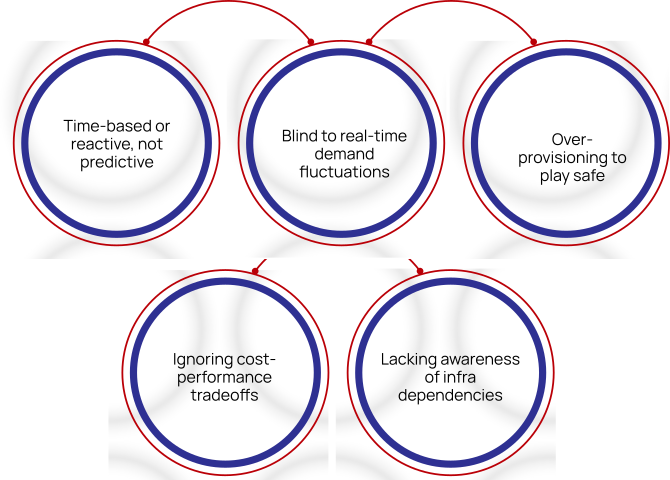
The scheduling gap
Rules can't see the future

Our approach
Demand-aware, cost-aware, SLA-aware
Calsoft’s intelligent scheduler uses:
Optimizations applied to:
Batch and real-time jobs (Airflow, Azure Data Factory, Step Functions)

01
ML model training workloads
02
CI/CD pipelines
03
Container orchestration (Kubernetes, ECS, AKS, EKS)
04
Streaming systems (Kafka, Flink)
05

Measurable gains
Save cloud. Save time. Deliver faster
| Metric | Before | After |
|---|---|---|
| Cloud cost per run | High | ↓ by 30–45% |
| Job SLA adherence | Inconsistent | ↑ to 98% |
| Compute idle time | Wasted | ↓ by 50% |
| Queue length | Long | Shortened by 60% |
| Manual interventions | Frequent | Rare |
How to start
Smart scheduling in 4 steps

Identify Target Workloads
Start with workloads that have high compute cost or frequent delay.

Ingest Historical Run Data
Pull logs, usage metrics, SLA breaches from your existing orchestrators.

Enable Prediction & Prioritization
Use ML models to forecast load and dynamically adjust job priorities.

Embed AI Scheduler
Integrate with existing orchestration layer to auto-assign resources, reschedule, or throttle workloads.
