

Large language models (LLMs) and generative AI have made building intelligent applications easier than ever. Enterprises can access powerful models through APIs or open-source frameworks and assemble prototypes in days. Internal copilots, AI assistants, and knowledge retrieval systems are increasingly being deployed across organizations.
Most enterprise AI initiatives do not stall because the model is incapable. They stall because the surrounding system is not ready for production. Data may be fragmented or outdated. Retrieval may ignore permissions. Integrations may be tightly coupled to one model provider. Governance may arrive after deployment. Costs, latency, and ownership may remain unclear.
According to Dataiku's 2026 Global AI Confessions Report, based on a survey of 900 CEOs, roughly four in five respondents said their roles could be at risk if AI fails to produce measurable business gains by the end of 2026. For enterprise leaders, the question is no longer, “Can we build an AI pilot?” It is, “Can we control, scale, and defend the outcome?” The scale of the problem is now well documented across independent research.
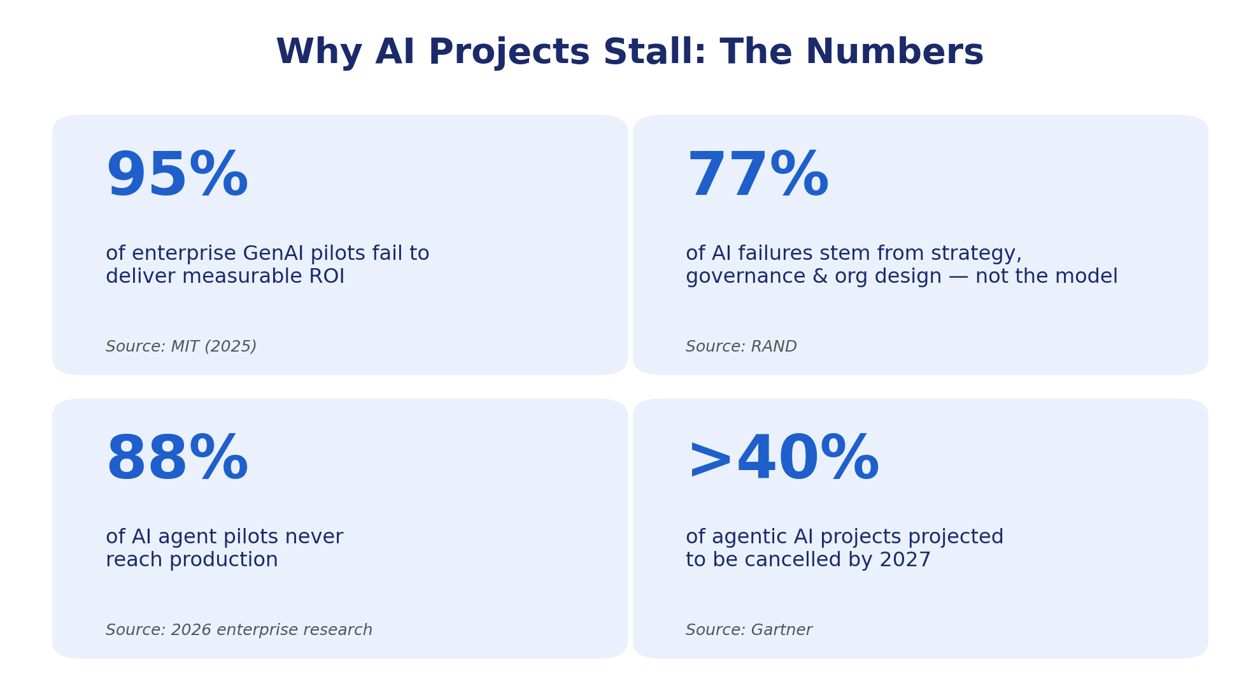
Figure 1: The pilot-to-production gap, by the numbers. Sources: MIT (2025), RAND, Gartner, and 2026 enterprise research.
The AI Execution Gap
A successful prototype usually runs on selected documents, limited users, controlled prompts, and predictable traffic. Production systems must handle conflicting document versions, role-based permissions, hybrid data estates, unpredictable concurrency, changing model APIs, ambiguous requests, and business decisions that require traceability. The contrast between pilot and production conditions is stark: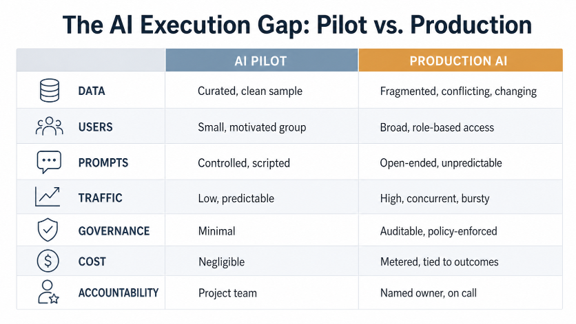
Figure 2: The AI execution gap — how pilot conditions differ from production across data, users, prompts, traffic, governance, cost, and accountability.
This comparison captures why so many AI initiatives stall after the demo. A pilot is engineered for ideal conditions — curated, clean sample data, a small and motivated group of users, controlled and scripted prompts, and low, predictable traffic. Governance is minimal, cost is negligible, and accountability sits informally with the project team.
Production inverts every one of these assumptions. The system must reason over fragmented, conflicting, and constantly changing data; serve a broad user base under role-based access; absorb open-ended, unpredictable prompts; and withstand high, concurrent, bursty traffic. Governance becomes auditable and policy-enforced, cost is metered and tied to business outcomes, and a named owner is on call for what the system produces. The execution gap is the sum of these shifts — and closing it is an engineering and operating-model challenge, not a modeling one.
This is the AI execution gap: the distance between demonstrating that a model can produce an answer and operating an AI system that is trusted, secure, measurable, and economically sustainable.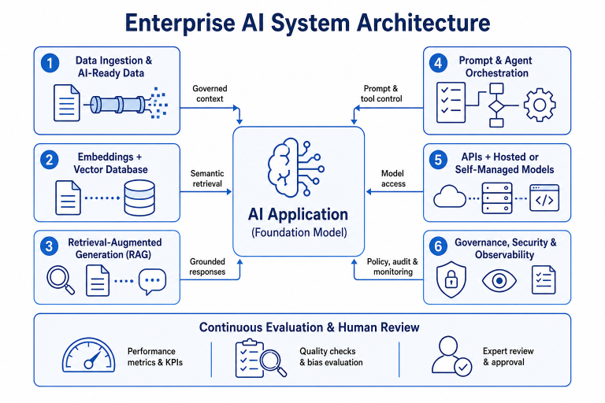
Figure 3: An enterprise AI system depends on more than the foundation model.
The large language model is only one component of an enterprise AI architecture. A production system also depends on ingestion and embedding pipelines, vector databases, retrieval-augmented generation (RAG), prompt and agent orchestration, APIs, policy controls, observability, and human review. Weakness in any layer can increase latency, cost, hallucination risk, or operational failure.
Five Blockers Between AI Pilot and Production
Moving AI from pilot to production exposes five critical gaps across data readiness, orchestration, governance, operational economics, and evaluation.
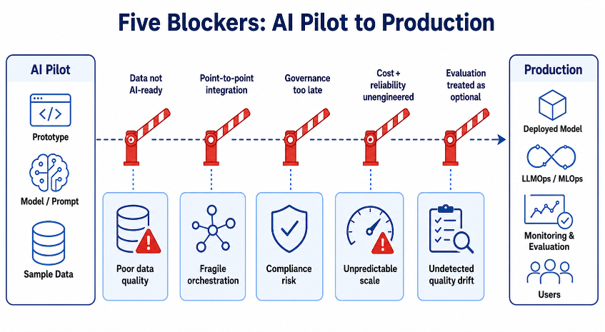
Figure 4: The five blockers between an AI pilot and production deployment.
Enterprise data is available but not AI-ready
Enterprise knowledge is distributed across cloud platforms, on-premises repositories, SaaS applications, tickets, emails, and edge systems. Poor metadata, duplicate content, stale documents, and unclear ownership reduce retrieval quality and user trust.
A production-ready data foundation needs governed ingestion, lineage, versioning, semantic indexing, freshness rules, and retrieval-time access control. It must also distinguish authoritative sources from obsolete or conflicting content. For enterprise search, retrieval quality is not only a model problem; it is a data-management and knowledge-architecture problem.
Orchestration is replaced by point-to-point integration
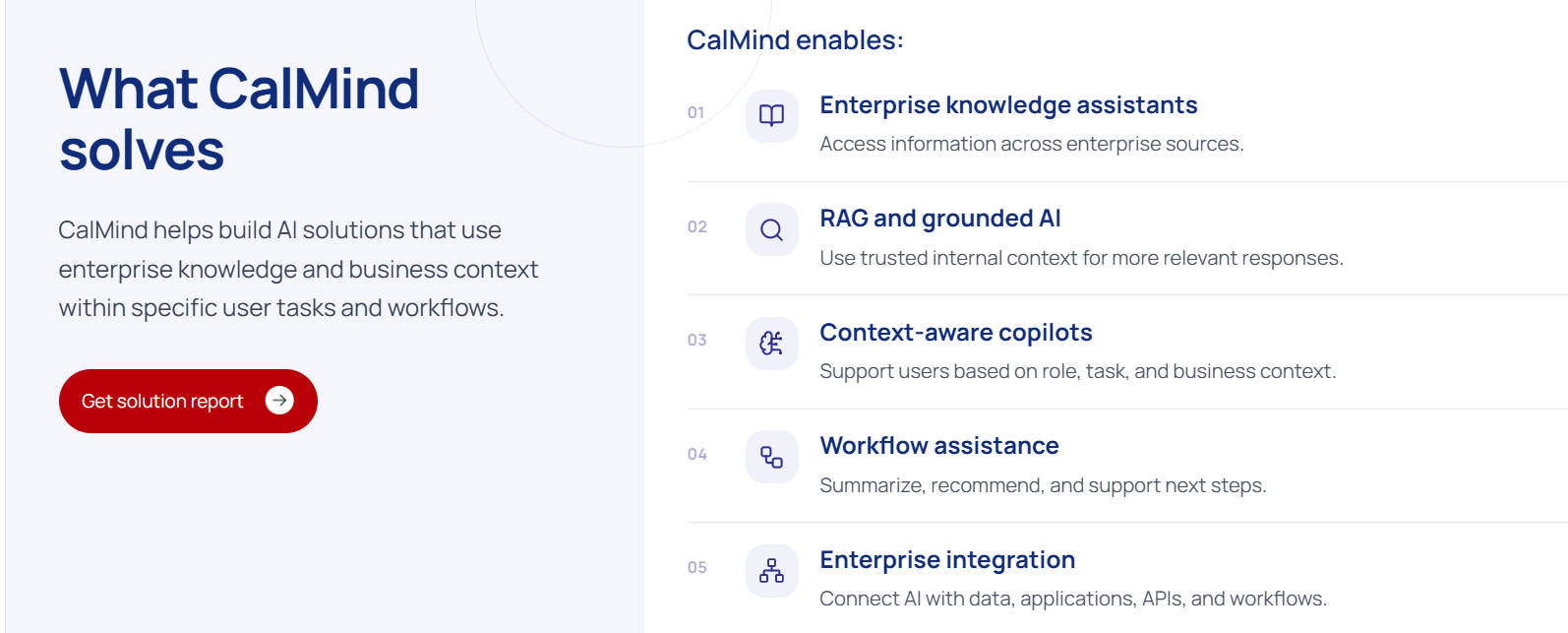
When teams connect a model directly to each application, they create hard dependencies and increase vendor lock-in. The application becomes difficult to change when models, tools, retrieval components, or policies evolve.
An orchestration layer should separate business workflows from model providers. It should route workloads according to privacy, latency, capability, risk, and cost; enforce shared policies; manage tools and prompts; and allow models or retrieval components to change without rebuilding every application.
This is also where the industry is standardizing. The Model Context Protocol (MCP) — released by Anthropic and now governed under the Linux Foundation's Agentic AI Foundation, with support from OpenAI, Google, Microsoft, and AWS — has become the de facto layer for connecting models and agents to enterprise tools and data, replacing brittle per-application connectors. For multi-agent workflows, agent-to-agent (A2A) protocols play a complementary role. The practical implication for leaders: an interoperability strategy now matters as much as model choice, and vendors and internal platforms should be evaluated for MCP compliance.
Governance and security arrive after deployment
Prompt logs, source citations, approval workflows, retention policies, model-risk ownership, and human-review checkpoints should be designed into the system from the beginning.
The NIST AI Risk Management Framework and its Generative AI Profile treat AI risk management as a lifecycle activity. The OWASP Top 10 for LLM Applications highlights risks including prompt injection, sensitive information disclosure, vector and embeddings weaknesses, excessive agency, and unbounded consumption. Enterprises in regulated markets must also map controls to emerging regulation and standards such as the EU AI Act and ISO/IEC 42001, the AI management-system standard.
Security also requires agent identity and least privilege. Agents should receive scoped credentials, approved tools, transaction limits, and escalation paths appropriate to the work they perform.
Economics and reliability are not engineered
Token usage, retrieval calls, agent loops, GPU utilization, and data movement can make a promising pilot uneconomical. Production systems also need predictable latency, failure handling, capacity planning, and support ownership.
Effective cost governance means per-use-case cost attribution from day one, committed spend limits on consumption-based services, and eliminating wasteful patterns such as agents that repeatedly poll for status. Leaders should measure more than model accuracy. Useful production metrics include cost per outcome, latency, grounded-answer rate, escalation rate, retrieval quality, error rate, user adoption, and measurable business impact tied to P&L rather than activity.
Evaluation is treated as optional
Many stalled projects never establish a systematic way to measure whether the AI system is actually correct, safe, and useful. Without an evaluation harness, teams rely on impressions from a few demo prompts and cannot detect regressions when data, prompts, models, or retrieval components change.
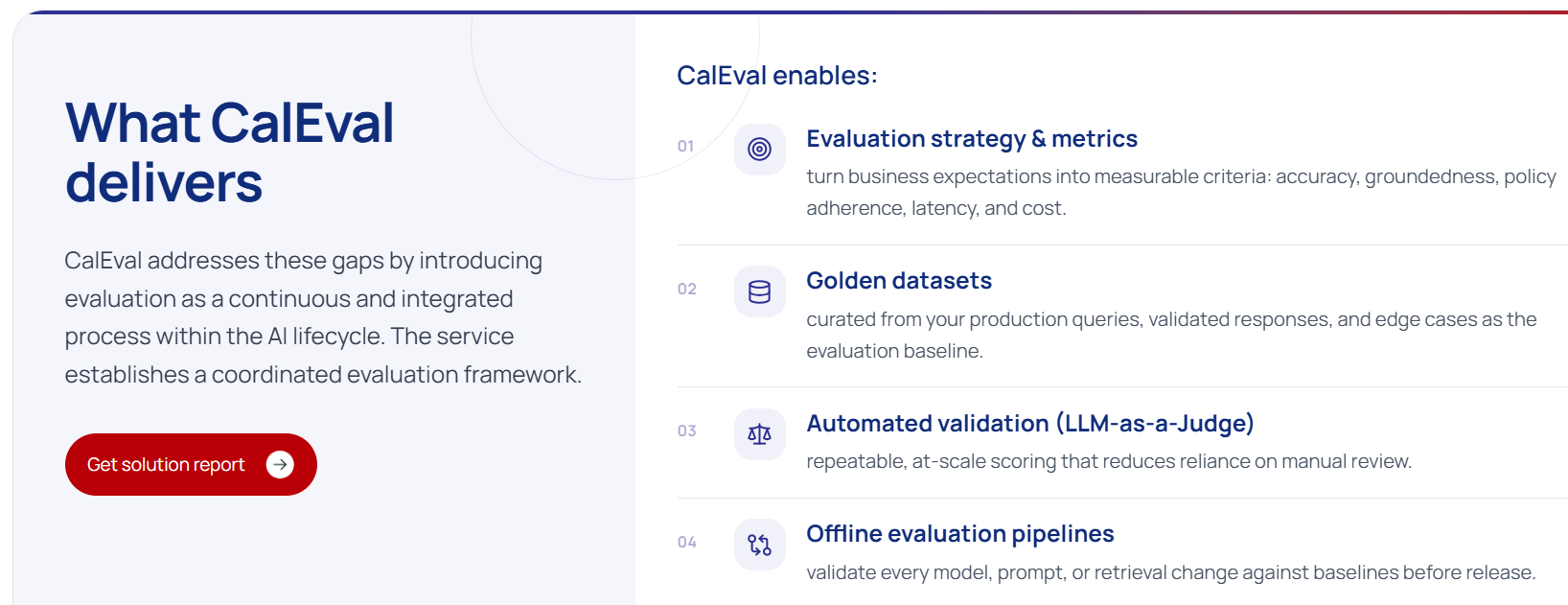
Production AI needs continuous evaluation as a first-class discipline: curated test sets and golden answers, automated scoring for accuracy, groundedness, and safety, regression testing across model and prompt versions, red-teaming for prompt injection and data leakage, and human review for sensitive or low-confidence outputs. Evaluation is what turns subjective confidence into evidence, and it is often the difference between a pilot that feels impressive and a system that can be trusted in production.
What an AI-Ready Data Platform Includes
An AI-ready data platform supports continuous generative AI workloads across structured and unstructured data. It combines governed ingestion, metadata and lineage, versioned datasets, embeddings and vector indexes, reusable data products, retrieval-time security, and observability across prompts, sources, and outputs.
Its value is not the storage layer alone. Its value is the ability to deliver trusted context to AI systems consistently and at scale.
- A practical readiness checklist includes:
- Prioritize governed, high-quality knowledge sources.
- Apply metadata, version-control, and freshness rules.
- Test role-based queries across business functions.
- Escalate low-confidence, conflicting, or sensitive responses.
- Use feedback loops to improve retrieval and response quality.
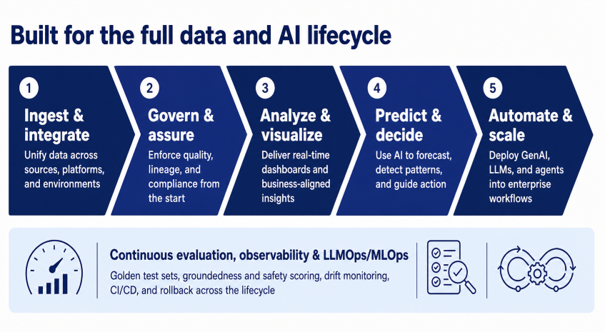
Figure 5: Production AI depends on the full data and AI lifecycle.
Trends Reshaping Production AI
A distinct engineering discipline is now addressing each of the discussed blockers. 2026 has also become the year enterprise AI agents began crossing from experimentation toward production, even as most pilots still fail to ship. The following trends are shaping how enterprises move from experimentation to dependable AI services.
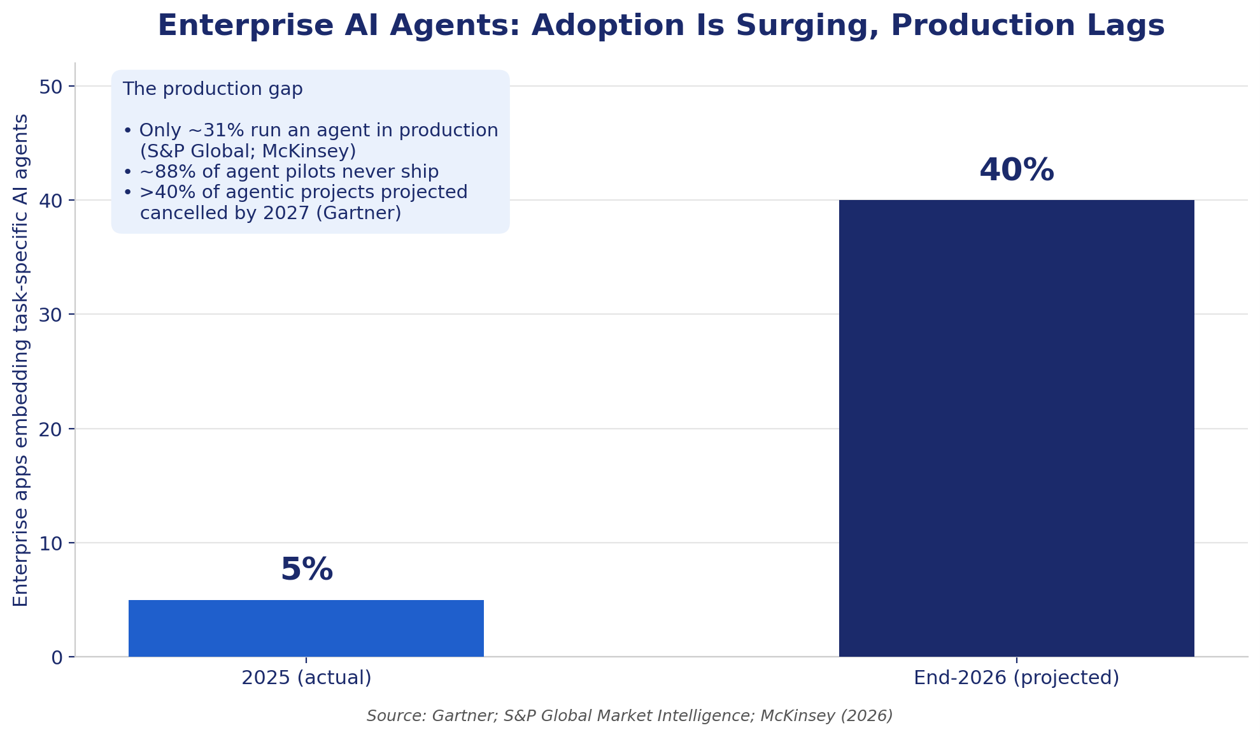
Figure 5: Production AI depends on the full data and AI lifecycle.
Multi-model orchestration
Enterprises are increasingly designing routing layers that select models by privacy, latency, capability, and cost instead of committing every workload to a single provider. Most teams now run several models in production, which improves flexibility but adds operational and evaluation overhead that must be managed.
Open interoperability: MCP and agent-to-agent
Enterprises are standardizing how models and agents connect to tools and to one another. MCP is emerging as the common integration layer for AI-to-tool access, while agent-to-agent (A2A) protocols coordinate multi-agent systems. Together they reduce lock-in and make model choice more substitutable, shifting integration from a per-project problem to a protocol decision.
Domain-specific intelligence and small language models
Smaller models, fine-tuning, and RAG are being combined to improve control and economics for specialized workflows. Small language models (SLMs) such as Phi, Granite, and Qwen increasingly rival larger models on specific tasks at a fraction of the cost, and Gartner expects task-specific SLMs to be used far more heavily than general-purpose LLMs by 2027. The best architecture is not always the largest model; it is the one that delivers the required quality, traceability, and cost for a specific task.
Agentic AI: identity, least privilege, and observability
As agents gain access to enterprise tools and workflows, identity becomes a core architectural concern. Agents need scoped credentials, approved actions, transaction limits, audit trails, and human checkpoints for sensitive or irreversible operations. Agent observability — tracing and evaluating multi-step tool workflows — is the essential operational frontier, and is materially harder than monitoring a single model.
Retrieval becomes an engineering discipline
Teams must continuously test source freshness, permissions, citations, ranking, groundedness, and conflict handling. Retrieval evaluation should be treated as an ongoing engineering process rather than a one-time configuration step.
AI FinOps converges with SRE
Token, GPU, storage, data movement, reliability, and latency must be managed together against business outcomes. Cost controls are most effective when they are connected to service-level objectives and user value rather than treated as an after-the-fact finance exercise.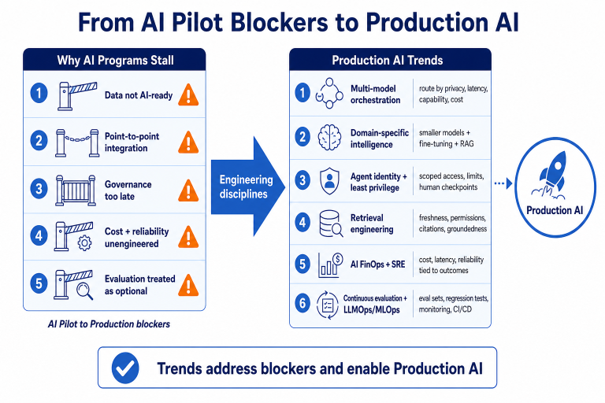
Figure 7: Engineering disciplines, including continuous evaluation and LLMOps/MLOps, connect pilot blockers with production-AI practices.
Executive Control for Production AI Readiness
As generative AI moves into core enterprise workflows, leaders need visibility into the data, security, cost, and accountability behind every AI-driven outcome. Key questions include:
- Is our data platform built for semantic retrieval at scale?
- Can we audit prompts, sources, outputs, and model behavior?
- Are we protected against prompt injection and data leakage?
- Are our AI vendors and platforms MCP-compliant and interoperable?
- Do we understand the long-term cost of AI deployment?
- Who owns AI-generated decisions and their business impact?
Answering these questions requires a production AI operating model with business ownership, governed data, modular RAG and AI orchestration, continuous observability, human-review checkpoints, and measurable outcome governance.
From AI Pilot to Production with Calsoft
The blockers above are not solved by a better prompt or a newer model. They are closed by engineering the production layer around AI: the data, orchestration, infrastructure, evaluation, and controls that let an enterprise trust an AI system in front of real users. This is where Calsoft works, backed by years in product engineering and a strong data and AI team.
Calsoft treats each blocker as an engineering discipline and works as per the client roadmap:
- AI-ready data foundation : Enterprise data management, data governance and quality, and modern lakehouse engineering turn fragmented content into governed, versioned, retrievable context with lineage and retrieval-time access control.
- RAG and agentic orchestration: A retrieval and orchestration layer that grounds responses in enterprise knowledge and coordinates multi-step, multi-tool workflows over open standards such as MCP, keeping applications decoupled from any single model provider.
- Governed AI operating model: Approval workflows, human-in-the-loop checkpoints, agent identity, and policy controls designed in from the start and aligned to NIST, OWASP, and emerging regulation, so AI can recommend and prepare actions while execution stays under enterprise control.
- AI infrastructure and operations: Model serving, multi-model routing, embeddings and knowledge storage, and monitoring of cost, latency, and performance, with LLMOps/MLOps for training, deployment, drift detection, and rollback through CI/CD.
- Evaluation and observability: Golden test sets, automated and LLM-as-a-Judge scoring for accuracy, groundedness, and safety, red-teaming, and live monitoring that catch regressions and reduce hallucination risk before users do.
In one enterprise data engagement, this discipline lifted data trust scores above 95% while cutting validation effort by roughly 50% — the kind of measurable foundation production AI depends on.
The objective is not to add another isolated AI tool. It is to create a secure, observable, and adaptable system in which enterprise data, models, agents, applications, and controls evolve together, and can be trusted, measured, and improved in production.
Talk to Calsoft about moving your AI from a promising pilot to a governed, production-grade system.
Summary
In the LLM era, competitive advantage will not come from accessing the newest model first. It will come from building an enterprise AI architecture that can absorb model change, govern data use, control agent behavior, and prove business value. Pilots demonstrate possibility. Production discipline turns that possibility into measurable business value.
Frequently Asked Questions (FAQs)
Why do AI pilots succeed in demos but fail in production?
Pilots use limited data, controlled prompts, and a small user group. Production AI must handle fragmented content, complex access controls, changing data, unpredictable queries, ongoing feedback, and operational support.
What is the biggest blocker in moving enterprise AI to production?
A common blocker is poor AI-ready data preparation. Outdated documents, duplicate content, weak metadata, unclear ownership, and missing access controls reduce retrieval accuracy and trust.
How can teams improve a stalled AI pilot?
Teams should review data sources, permissions, retrieval quality, evaluation, user feedback, monitoring, cost, and support ownership. Improving production AI requires stronger governance and operating processes, not only LLM tuning.
What role does the Model Context Protocol (MCP) play?
MCP is emerging as a standard way for AI models and agents to connect to enterprise tools and data. It reduces custom, brittle integrations, lowers vendor lock-in, and gives security teams a consistent point for governance and observability.
What does an AI-ready data platform provide?
It provides governed access to trusted structured and unstructured data, along with metadata, lineage, versioning, semantic retrieval, security controls, and observability for prompts, sources, and outputs.