

“Organizations are actively investing in cloud technology due to its potential to foster innovation, create market disruptions, and enhance customer retention to gain a competitive edge,” says Milind Govekar, Distinguished VP Analyst at Gartner.
As a result, IT spending on public cloud services is growing at an unprecedented rate. By 2024, Gartner forecasts global spending to hit $679 billion; by 2027, it may soar beyond $1 trillion. Organizations increasingly rely on the cloud for infrastructure needs to gain operational freedom and lower infrastructure costs.
Since cloud adoption is now mainstream, choosing the right model matters more than ever. Each option presents unique advantages and challenges, making it essential to understand the differences to find the best fit for your business needs. This blog explores the differences between public, private, and hybrid cloud models.
What is Cloud Computing?
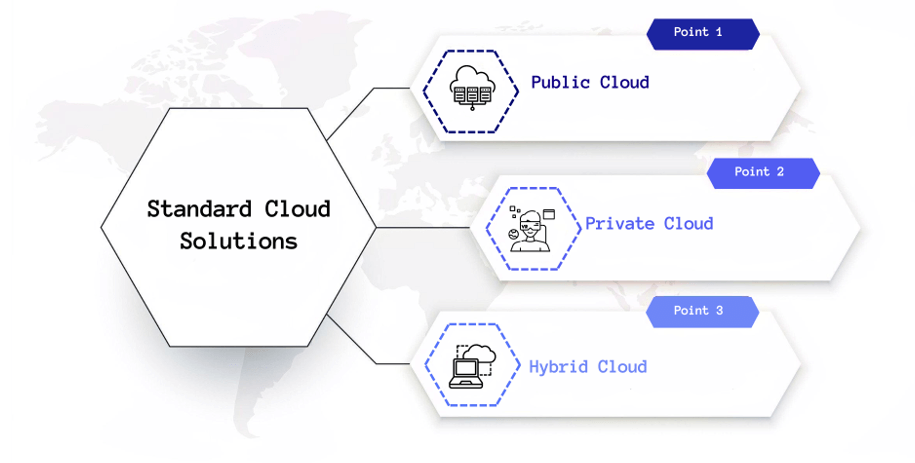
Cloud computing delivers services like storage, networking, and software via the Internet. You no longer rely on physical hardware — instead, you access these services from cloud providers and pay only for what you use. Common cloud models include:
- Public Cloud
- Private Cloud
- Hybrid Cloud
Choosing the right cloud model impacts your business’s security, cost, and operations. Public clouds save costs but offer less control, private clouds enhance security at a higher cost, while hybrid models balance both aspects efficiently.
What is a Public Cloud?
A public cloud delivers computing services over the Internet that multiple organizations can access. The provider manages infrastructure, maintenance, and security, allowing users to focus on operations. Key features include:
- Scalability: Easily scale resources up or down as per demand.
- Cost-Effectiveness: Pay only for what you use, reducing upfront costs.
- Elasticity and Flexibility: Instantly adjust resources to handle fluctuating workloads.
Pros and Cons of Public Cloud
| Pros | Cons |
|---|---|
| Quickly scale resources up or down to match demand. | Less control over infrastructure and resource management. |
| Lower upfront costs due to pay-per-use model. | Shared infrastructure may pose data security risks. |
| Fast setup as the provider maintains infrastructure. | May not meet industry-specific compliance requirements. |
| Pay only for what you use, reducing waste. | Vendor lock-in may limit switching providers easily. |
What is a Private Cloud?
A private cloud is a dedicated environment designed exclusively for one organization. Unlike public clouds, it’s not shared with others. You can host it on-premises or through a third-party provider. Key features include:
- Security and Control: Offers maximum security with custom encryption and protocols.
- Customization: Tailor the infrastructure and configurations as per your business needs.
Pros and Cons of Private Cloud
| Pros | Cons |
|---|---|
| Complete control over data and infrastructure. | Higher upfront and maintenance costs. |
| Customizable to meet specific business requirements. | Requires advanced technical expertise. |
| Enhanced security for sensitive data. | Scaling can be slower and more expensive. |
Hybrid Cloud: A Combination of Public and Private Clouds
A hybrid cloud blends public and private cloud environments, allowing organizations to store sensitive data privately while leveraging public cloud scalability for other operations. Core features include:
- Flexibility: Seamlessly integrate public and private environments for optimal performance.
- Scalability with Security: Keep sensitive workloads private while scaling non-critical ones on public infrastructure.
Pros and Cons of Hybrid Cloud
| Pros | Cons |
|---|---|
| Switch between clouds based on workload. | Managing multiple environments adds complexity. |
| Optimize cost by splitting workloads appropriately. | Integration between clouds can be challenging. |
| Scales up resources efficiently when needed. | Data transfer between clouds may pose risks. |
Key Differences Between Public, Private, and Hybrid Clouds
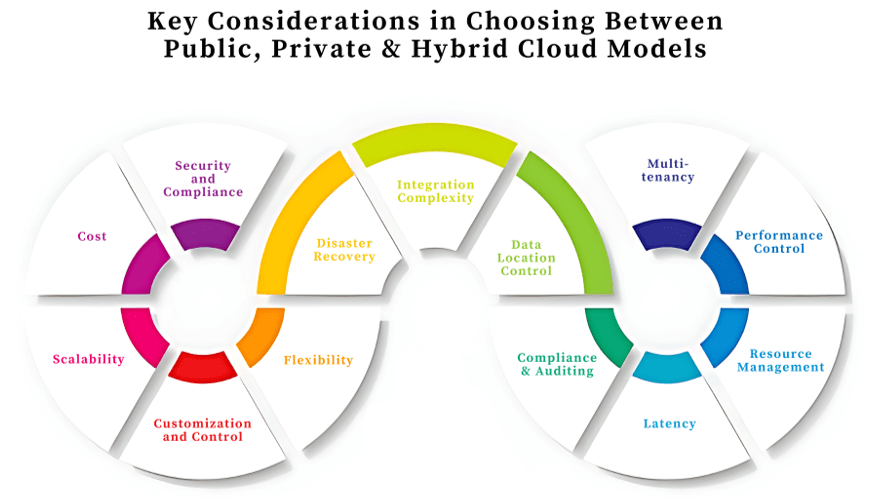
| Feature | Public Cloud | Private Cloud | Hybrid Cloud |
|---|---|---|---|
| Security & Compliance | Shared infrastructure | Dedicated environment | Balanced security |
| Cost | Low upfront, pay-per-use | High upfront, ongoing maintenance | Optimized cost split |
| Scalability | Highly scalable | Limited by infrastructure | Flexible scaling across environments |
| Control | Limited | Full control | Custom control |
| Latency | Variable | Low | Depends on workload placement |
| Compliance | Standard | Custom | Split based on data type |
| Performance | Shared resources | Dedicated resources | Balanced workload distribution |
Use Cases for Public, Private, and Hybrid Cloud
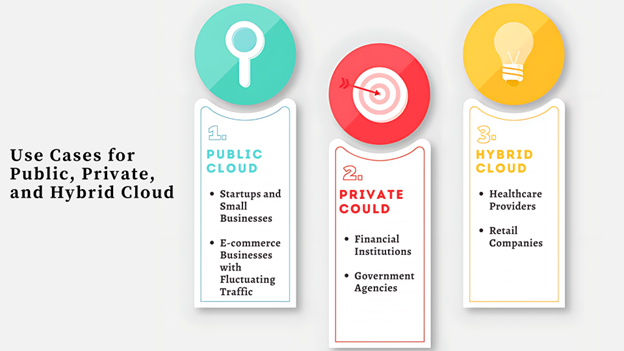
Public Cloud
- Startups & Small Businesses: Cost-effective scalability using AWS, Azure, or Google Cloud.
- E-commerce: Easily handle fluctuating traffic with on-demand scalability.
Private Cloud
- Financial Institutions: Secure handling of sensitive customer data.
- Government Agencies: Comply with strict data protection and national regulations.
Hybrid Cloud
- Healthcare: Store patient data privately while using public cloud for telemedicine.
- Retail: Use private cloud for payment processing and public cloud for other operations.
How to Choose the Right Cloud Model for Your Business
Start by evaluating your organization’s specific needs. Consider:
- Data Sensitivity: Private or hybrid for sensitive data; public for less critical workloads.
- Compliance: Industries with strict regulations should consider private or hybrid setups.
- Cost Flexibility: Public clouds are cost-efficient for fluctuating needs; private offers stability for consistent workloads.
Can you switch cloud models? Yes. Many businesses start with public clouds for cost savings, then migrate to hybrid or private models as their security and control needs grow.
Wrapping Up
As organizations scale, cloud computing becomes essential for competitiveness. Public clouds offer cost-effective scalability, private clouds provide maximum control, and hybrid clouds deliver the best of both worlds — flexibility with security.
Before choosing, assess your needs carefully and align your cloud strategy with long-term goals. A hybrid cloud approach often offers the perfect balance of scalability and security.
Calsoft, with over 25 years of product engineering expertise, helps businesses modernize through innovative cloud solutions. From strategy and deployment to monitoring and management, Calsoft enables organizations to harness the full potential of cloud technology.