

What will you do when your data center migration results in unplanned downtime? Imagine your systems go offline, locking out customers. With every passing minute, you lose both revenue and credibility. This is one of the critical data center migration challenges most companies face.
Data center migration is a complex process for many organizations. Despite the growing trend toward cloud migration, unplanned downtime remains a major risk. According to Gartner, around 83% of data migration projects experience some form of failure, with over 50% exceeding their budget.
To mitigate these risks, organizations must approach data center migration with careful planning and execution. This involves addressing potential issues like system failures, data loss, and security breaches. By proactively managing these challenges, businesses can ensure a seamless transition, gain scalability, and enhance efficiency. The right strategies can help prevent downtime and ensure a smooth migration.
What is Data Center Migration and Why It Matters
Data center migration refers to moving an organization’s IT infrastructure — including data, servers, and applications — from one environment to another. This could be to a new physical facility, a cloud environment, or a hybrid model. The objective is to achieve this without disrupting business operations.
It’s a comprehensive process involving planning, execution, and relocation of data centers to a more efficient or modernized setup. Typically, this migration includes shifting from traditional on-premises systems to cloud-based or managed environments.
How Data Center Migration Helps Businesses
- Cost Efficiency: Moving to newer infrastructure reduces maintenance and energy costs while eliminating frequent repair expenses.
- Scalability: Modern data centers scale resources up or down based on business demand without overhauling systems.
- Improved Security: Advanced encryption, access controls, and disaster recovery mechanisms strengthen data protection.
- Business Continuity: Redundancy and failover systems ensure minimal downtime during disruptions or disasters.
- Simplified Management: Centralized monitoring and maintenance streamline IT operations and improve team productivity.
Each of these advantages contributes to a more agile, future-ready business.
6 Common Data Center Migration Challenges
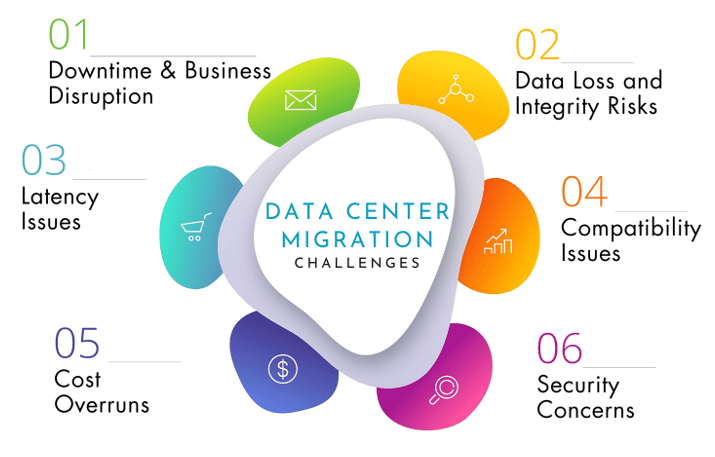
Let’s explore the typical challenges organizations face during large-scale migrations — and how they can derail projects if not handled proactively.
1. Downtime and Business Disruption
Downtime during migration can be disastrous, especially for 24/7 businesses. Even a few minutes of outage can cause financial loss and erode customer trust. The key lies in minimizing downtime and ensuring operations resume seamlessly.
2. Data Loss and Integrity Risks
Data is the backbone of any organization. Errors during migration can lead to loss or corruption of critical information like customer records or financial data, making data integrity checks essential.
3. Latency Issues
Poorly planned migrations can increase latency — the delay in data transmission — particularly impacting real-time applications like IoT, e-commerce, or video streaming.
4. Compatibility Issues
Legacy systems may not integrate well with modern cloud or hybrid environments, causing software conflicts or failures. Compatibility testing is critical before full-scale migration.
5. Cost Overruns
Without accurate forecasting, unexpected expenses can arise — from extra infrastructure to extended staff hours — leading to significant budget overruns and post-migration financial strain.
6. Security Concerns
During migration, data is vulnerable to breaches. Attackers may exploit temporary security gaps, causing reputational and legal damage. Continuous monitoring and encryption are vital defenses.
Practical Solutions to Overcome Data Center Migration Challenges
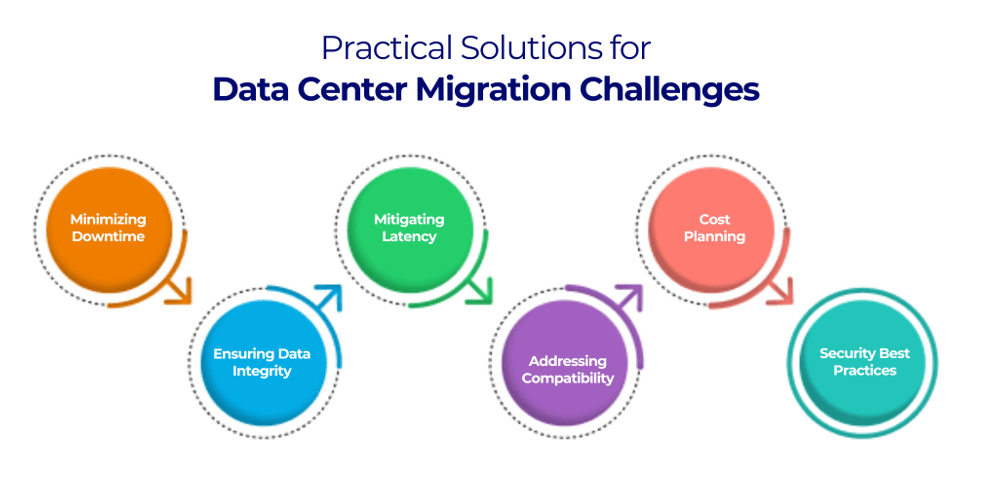
Now that we understand the challenges, let’s look at practical, actionable strategies to ensure your migration is secure, efficient, and disruption-free.
1. Minimize Downtime
Adopt a phased migration approach — move systems in smaller batches instead of all at once. Conduct pre-migration testing and maintain rollback plans to revert in case of issues. Pilot migrations help identify problems early.
2. Ensure Data Integrity
Back up all data before migration and store copies in multiple locations. Use encryption and automated validation tools to ensure accurate transfer and maintain consistency during the process.
3. Mitigate Latency
Optimize your network infrastructure and balance workloads across servers to reduce delays. Keep latency-sensitive applications closer to end-users through geo-distribution strategies.
4. Address Compatibility
Use middleware tools to bridge old and new systems. Begin with less critical applications to identify and resolve compatibility issues before full-scale deployment.
5. Plan Costs Effectively
Build an accurate migration budget by factoring in infrastructure, licensing, and labor costs. Use automation tools to reduce manual errors and prevent unexpected expenses.
6. Strengthen Security
Implement encryption (in transit and at rest), strict access controls, and ongoing compliance checks. Use multi-factor authentication and conduct frequent vulnerability scans during and after migration.
Steps to Prepare for a Successful Migration
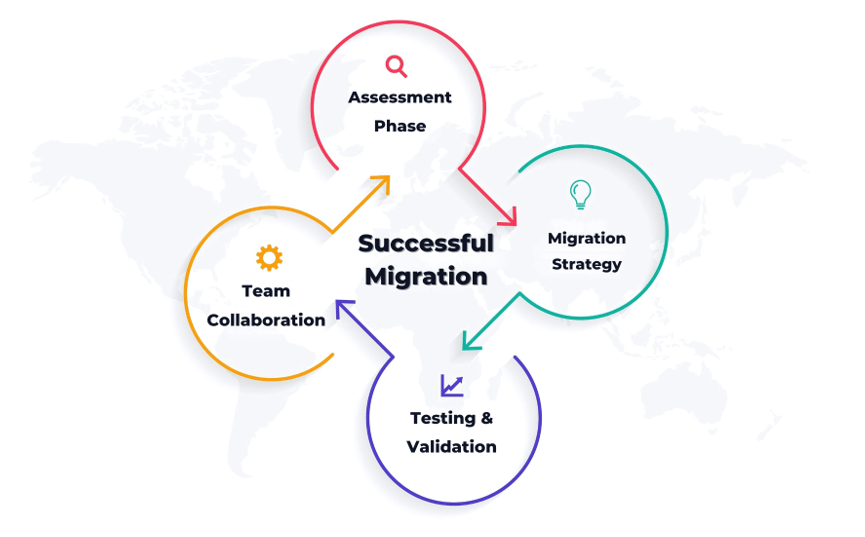
1. Assessment Phase
- Audit hardware, software, and network assets.
- Identify mission-critical systems and dependencies.
- Document current configurations to create a migration roadmap.
- Flag legacy systems that may need upgrades or replacement.
2. Migration Strategy
- Develop a detailed roadmap outlining each migration phase.
- Set clear timelines, task owners, and rollback contingencies.
- Begin with non-critical workloads to test the process.
3. Testing and Validation
- Test components before moving the entire system.
- Run live tests during migration to validate performance and accuracy.
- Conduct post-migration validation and user acceptance testing (UAT).
4. Team Collaboration
- Form a cross-functional team with IT, business leaders, and vendors.
- Schedule regular progress meetings and updates.
- Ensure executive support for faster decision-making and resource allocation.
Best Practices for Post-Migration Optimization
- Continuously monitor system performance to identify bottlenecks.
- Perform post-migration security audits and vulnerability scans.
- Optimize resource usage and scale infrastructure based on demand.
Post-migration success depends on consistent monitoring, optimization, and security vigilance to maintain performance and cost-efficiency.
Parting Thoughts
Data center migration is more than moving infrastructure — it’s about transforming your operations for growth and resilience. While it poses challenges like downtime, data loss, and compatibility issues, they can be managed through meticulous planning, testing, and automation.
Calsoft, a leading technology partner with over 25 years of experience in data center migration services, offers comprehensive solutions for secure, seamless migration. Our certified engineers help minimize disruption while maintaining data integrity, security, and business continuity.