

Security systems trigger alarms whenever there is a cyberattack. Your IT team is overwhelmed and needs help keeping pace with the relentless threats. You can no longer rely on traditional security measures. To adapt, you need a faster and more efficient solution. That solution is Security Orchestration, Automation, and Response (SOAR).
According to Market research reports , analysts forecast that the SOAR sector will expand significantly from US$1.3 billion to US$3.8 Billion by 2032. This anticipated expansion reflects the growing recognition of SOAR as an essential element of modern cybersecurity architecture. SOAR has transitioned from an optional enhancement to a critical necessity for safeguarding digital assets.
What is SOAR in Cybersecurity?
SOAR is the next step in defense. It represents an advanced approach to threat mitigation and incident response. Think of it like a fire drill but for cyberattacks. Except the drill puts out the fire for you. At its core, SOAR is the framework that smart organizations are adopting to protect their systems.
SOAR is a comprehensive system integrating various security tools into one orchestrated platform.
These tools may include the following:
- Threat detection software
- Incident management systems
- Threat intelligence feeds
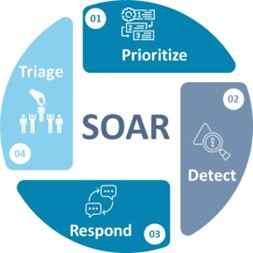
In modern security operations, time is the biggest constraint. Attackers will take advantage of your traditional defense mechanism that assesses threats manually. They will exploit any gap they can find. SOAR helps close those gaps by doing the following critical things:
Orchestration: SOAR ensures that all your security tools and processes work together. It integrates everything into a single workflow, minimizing manual intervention.
Automation: You can automate tasks that are routine, predictable, or previously handled manually. This reduces human error and frees your team to focus on more complex challenges.
Response: SOAR enables fast, automated responses. When your system identifies a security incident, it can immediately execute predefined responses. These could include isolating compromised devices, blocking malicious IP addresses, or even disabling affected user accounts.
In the cybersecurity ecosystem, SOAR is your strategy for staying proactive rather than reactive. Instead of responding to attacks after they’ve done damage, SOAR positions your team to act quickly, decisively, and—most importantly—before the threat can escalate.
How SOAR Works
SOAR is more than just another cybersecurity tool. It is a multi-layered system that transforms your entire approach to security threats. It integrates, automates, and responds faster than traditional methods. Let’s analyze the mechanisms by which SOAR achieves this:
Data Collection
SOAR is the central hub, pulling data from all your security tools. It will use data from your firewalls, endpoint detection, threat intelligence platforms, or SIEM systems. This collected data forms the foundation for everything that comes next. However, SOAR doesn’t just gather data; it does so in real-time. This means that the entire system is constantly in sync with what’s happening across your network. The most common data include the following:
- Logs
- Alerts
- Incident reports
- Threat intelligence from external sources
- Network data
- User Activity
Analysis
Once the data is collected, the system starts its analysis phase. This is where SOAR applies machine learning, predefined rules, and correlating various inputs to prioritize threats. It then identifies irregularities and tries to understand the critical issue. Furthermore, it will also highlight which incidents demand immediate attention. For example, a standalone tool might flag a suspicious login attempt. SOAR then correlates that login attempt with other network anomalies and raises the urgency level.
Automated Response
The final phase is where SOAR automates responses. Once a threat has been identified and prioritized, SOAR executes pre-defined responses without waiting for manual input. Responses can range from simple actions like isolating a compromised device to more complex workflows that involve escalating the issue to human analysts for further investigation.
The automation ensures that the system takes appropriate action when an incident occurs, with minimal delay. Some typical automated responses include:
- Quarantining files
- Disabling user accounts
- Blocking IP addresses
Key Components of SOAR
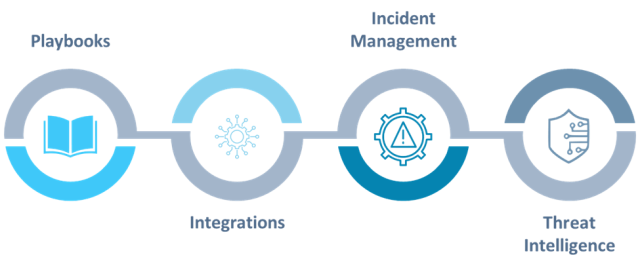
Playbooks
Playbooks in SOAR are predefined, structured workflows that automate the response to specific security incidents. Here’s how they work:
- A playbook outlines a series of steps to follow when it detects a particular type of threat. For example, in the case of a phishing attack, the playbook would dictate specific actions.
- Once the system triggers an alert, SOAR follows the playbook to execute tasks automatically.
- Playbooks ensure that the system handles every incident in a standardized way.
- You can customize playbooks to fit your specific policies and risk tolerance.
Integrations
- SOAR integrates with various security tools to collect data.
- These integrations provide a unified view of security incidents.
- SOAR can automate responses across different systems.
Incident Management
- SOAR ingests the data from integrated tools when a security event is detected.
- SOAR uses predefined rules to classify each incident’s severity.
- SOAR can automatically trigger a response based on playbooks.
- If human intervention is needed, SOAR escalates and notifies the right teams.
- SOAR generates a detailed report covering detection to resolution.
Threat Intelligence
- SOAR pulls data from multiple external threat intelligence sources.
- Threat intelligence enhances the system’s overall contextual awareness.
- SOAR ensures your strategy stays up to date by ingesting updated threat feeds.
Benefits of SOAR
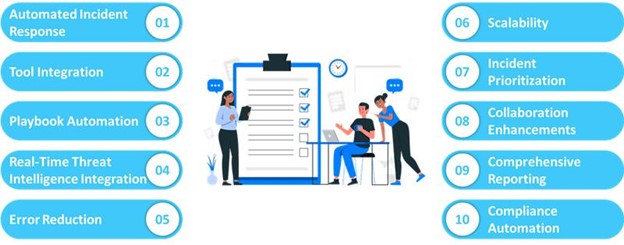
- Automated Incident Response: Reduces the need for manual handling of repetitive tasks.
- Tool Integration: Centralizes SIEM, EDR, and firewalls in one platform.
- Playbook Automation: Ensures consistent handling of incidents.
- Real-Time Threat Intelligence: Incorporates external intelligence feeds.
- Error Reduction: Minimizes manual mistakes.
- Scalability: Grows with infrastructure and needs.
Conclusion
SOAR is more than just an automation tool. It is a critical framework for enhancing security operations. SOAR helps automate workflows, centralize data, and leverage real-time intelligence. As cyberattacks grow in complexity, investing in SOAR has become a necessity.
Calsoft, as a technology-first company, supports its customers in implementing ServiceNow Security Operations.