Storage infrastructure rarely gets the spotlight. The conversation usually starts and ends with the model, including the parameters, benchmarks, and compute. What sits underneath it, and what it takes to make AI actually work in production, is a different conversation entirely.
That's the one the SNIA India T/E/N Storage Meetup was built for.
Hosted by Calsoft at their Pune office on May 6, 2026, the meetup brought together storage engineers, infrastructure architects, and enterprise tech leaders for an afternoon of practitioner-first sessions, with no vendor pitches or surface-level overviews. T/E/N: Technical, Education, Networking. That's exactly what it delivered.
Storage has a numbers problem & nobody's talking about it
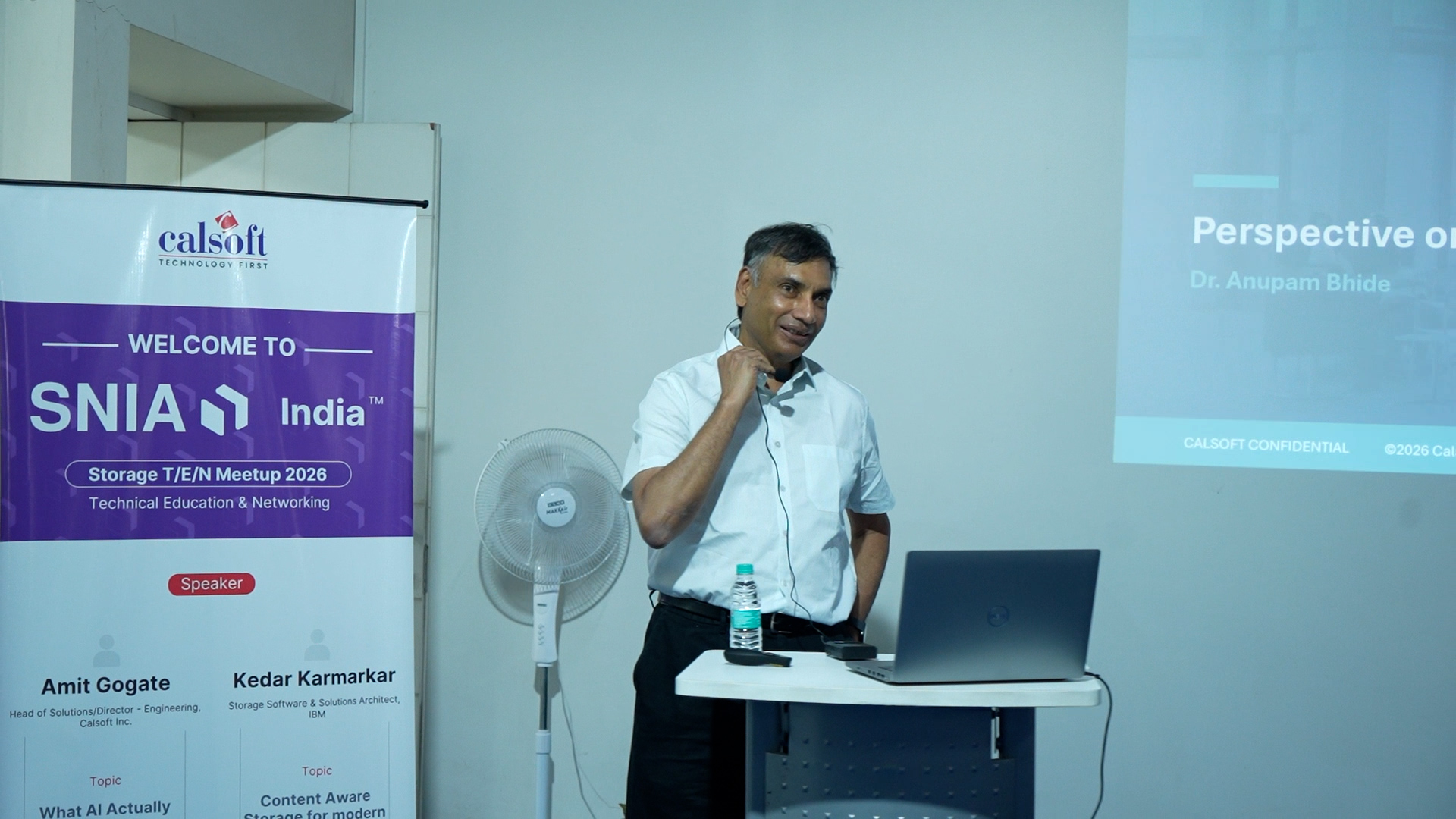
Dr. Bhide opened with data and a provocation.
In 2015, storage accounted for roughly 25–30% of total infrastructure spending. By 2024–26, that share had nearly halved. Servers declined too, but not nearly as sharply. What grew? GPU and accelerator spending, driven almost entirely by the AI build-out.
His point wasn't doom. It was a provocation.
"Storage is still very, very important in the infrastructure space. AI workloads; storage is a very big and important bottleneck."
But relevance and budget share aren't moving together. His ask: stop waiting for recognition to come. Redefine what storage means in the AI era, or watch the gap widen. He put three paths on the table for storage professionals: stay and deepen expertise, move into AI-era companies where storage is a live bottleneck, or work in adjacent fields. Then he handed it to Piyush Gupta to take the conversation forward.
Also Read: AI-Powered Cloud Storage: Transform Enterprise Data Management
SNIA India is changing its avatar
Piyush Gupta, who took over as SNIA India Board Chair in January 2026, was clear about one thing: SNIA isn't new. It's 35 years old globally, 20 years in India. The question isn't what it is; almost everyone in the room already knew. The question is what it becomes next.
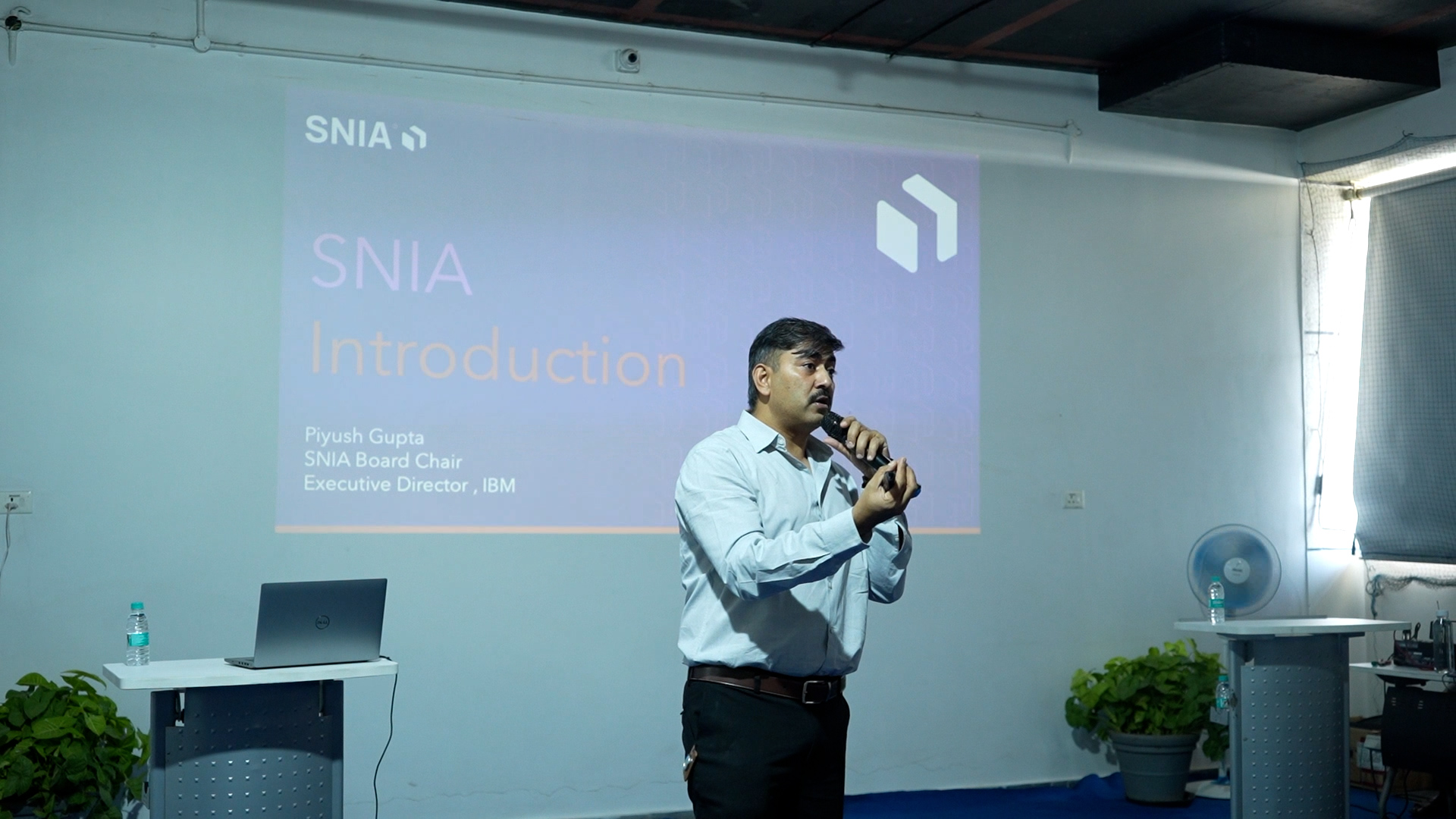
He outlined an ambitious shift: more meetups, symposiums, developer conferences, webinars; platforms for practitioners to share, not just listen. An aspiration to become an advisory body to NASSCOM and eventually the Government of India on strategic storage decisions. And a focus on staying vendor-neutral, always.
"The moment you wear the SNIA hat, you become a technologist. You're not talking about your own company; you're talking about technology."
He also flagged something the room needs to read about: the pricing supercycle in NAND and memory components. AI factories, he said, are consuming global hardware inventory at a pace storage and server vendors can barely keep up with. Innovation and cost dynamics, he argued, must move together; one without the other doesn't make business sense.
The engineering question nobody has answered yet
Amit Gogate, Director of Technology at Calsoft, opened his session with a frame that set the tone for everything that followed: He wasn't there to sell a solution. He was there to name an unsolved problem.
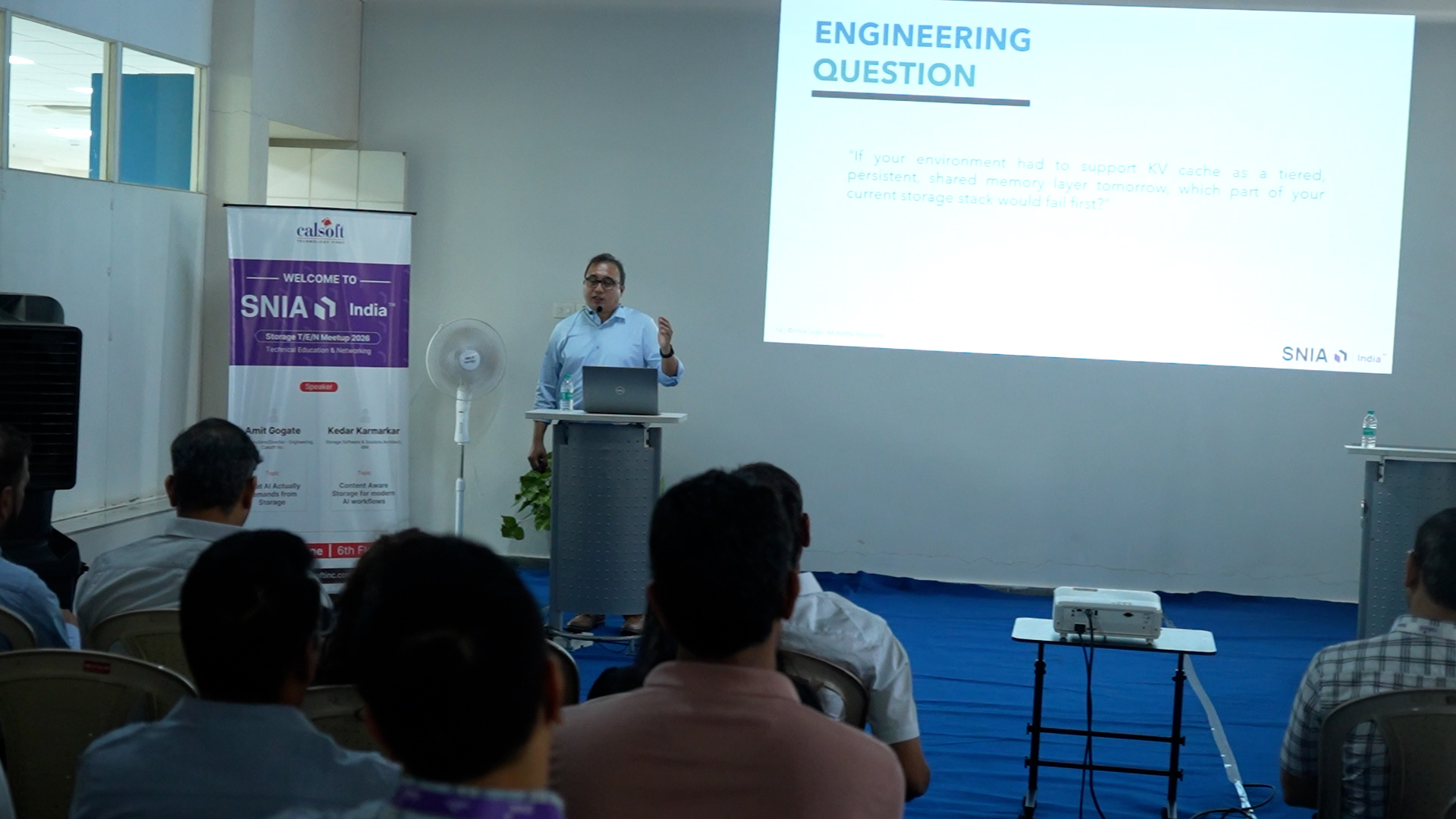
His focus: KV cache, the memory layer that sits at the heart of large language model (LLM) inference. Every major storage vendor has entered this space. Dell, NetApp, IBM, WekaFS, VAST, all with their own proprietary implementations, differentiated more, as Amit put it, by language than by architecture.
"These positions are differentiated more by the language than by architecture. They all roughly do the same thing: tiered storage with RDMA to GPU."
The open-source side is moving fast too: LMCache, Mooncake, NIXL, llm-d, Dynamo. But the standards layer hasn't kept up. SNIA Storage.ai launched in August 2025 with six working areas. NVIDIA, notably, is absent.
And the gap Amit pointed to directly; no standard yet exists for how the KV cache memory tier should be managed as a subsystem. No lifecycle contract. No canonical format. No observability framework. No QoS model.
He closed with a question he left the room to sit with:
"If your environment had to support KV Cache as a tiered shared memory layer tomorrow, which part of your current storage stack would fail first?"
Content-aware storage: Let the system do the thinking
Kedar Karmarkar, Storage Software and Solutions Architect at IBM, picked up exactly where Amit left off and went in a different direction.
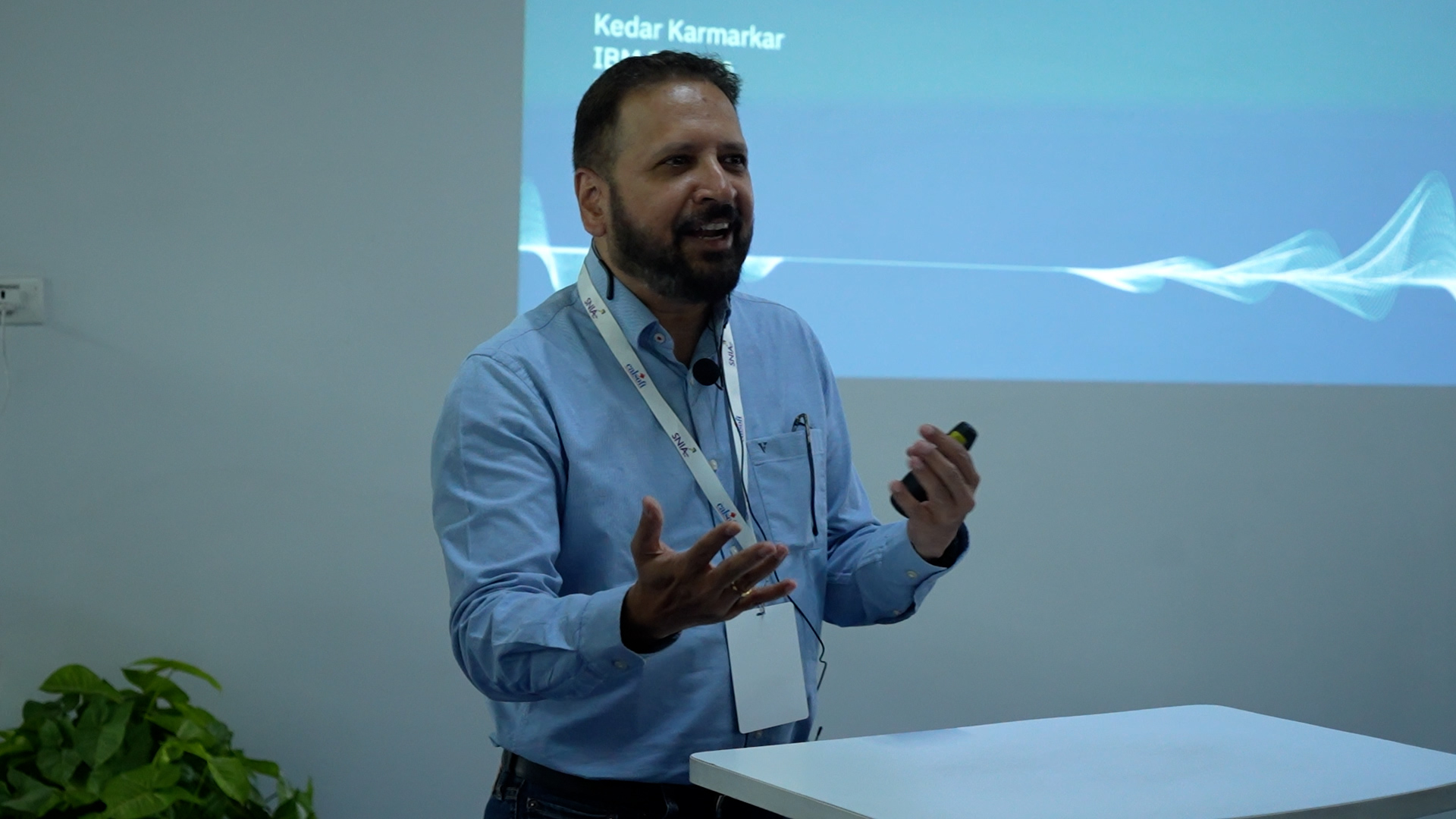
Where Amit mapped the problem space, Kedar argued for a specific architectural response: storage that understands what it holds, not just how much. Content-aware storage: systems that can classify, route, and act on data based on its nature rather than treating all bytes equally.
His core argument: storage practitioners are leaving too much implementation work to the application layer. The infrastructure itself should carry more intelligence.
"Content-aware storage is something that anyone can go and build. As a storage practitioner, I believe this is where we need to move our solutions; rather than leaving storage-related decisions for someone else to implement themselves."
The Q&A that followed was sharp. An audience member raised the question of hybrid GPU-FPGA architectures for KV cache, whether FPGAs could handle specific workloads like fast decompression of streaming data. Kedar's response was grounded: FPGAs have a role, but the fundamental capacity constraint doesn't disappear. Storage will come back into the picture regardless.
Storage is the unsung hero. Not for much longer
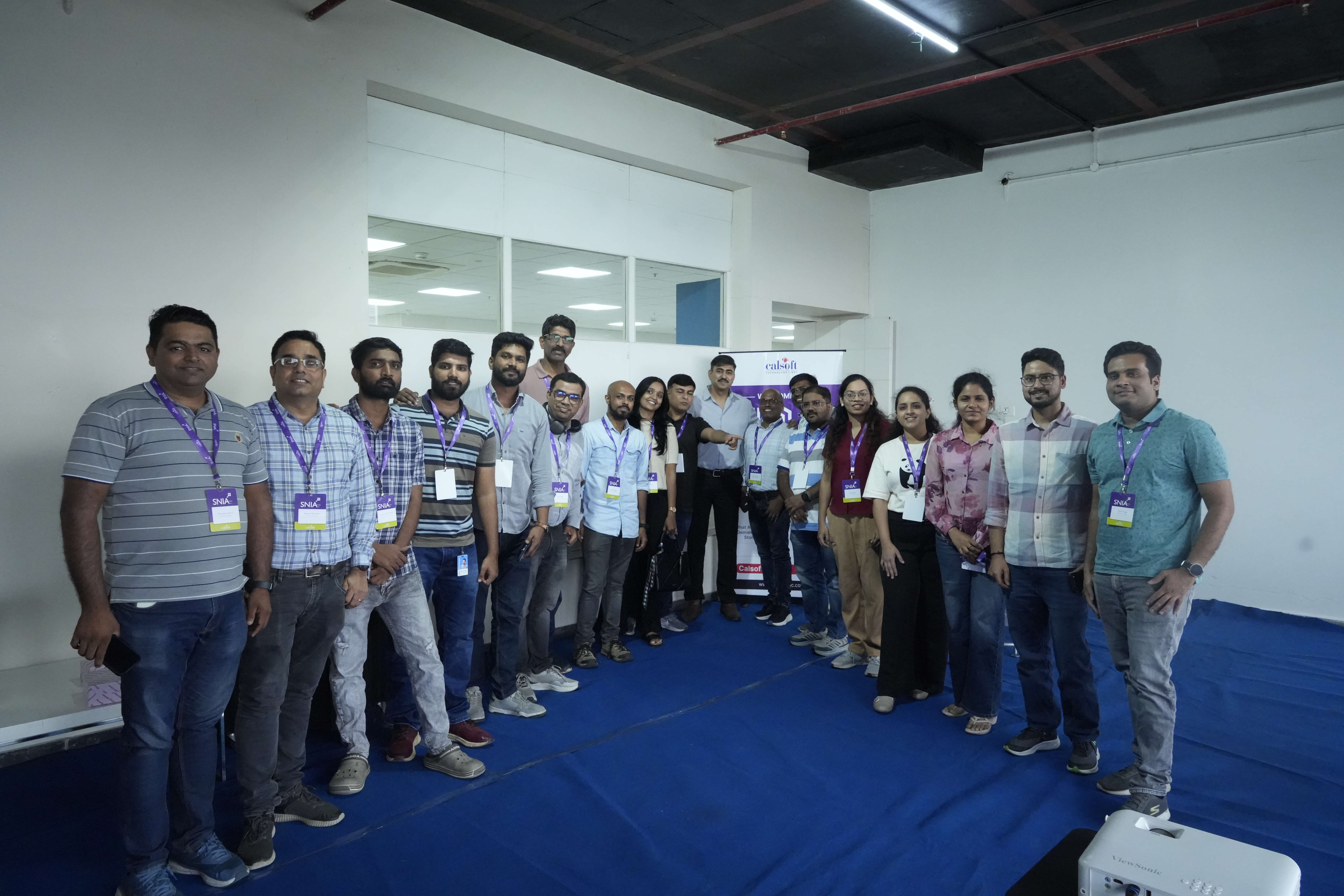
Vipin Shankar, Senior Vice President at Calsoft, closed the formal programme with the line that probably landed hardest.
"AI is old. But storage is much older; much, much older. And all these decades, it has been the unsung hero of the entire compute story."
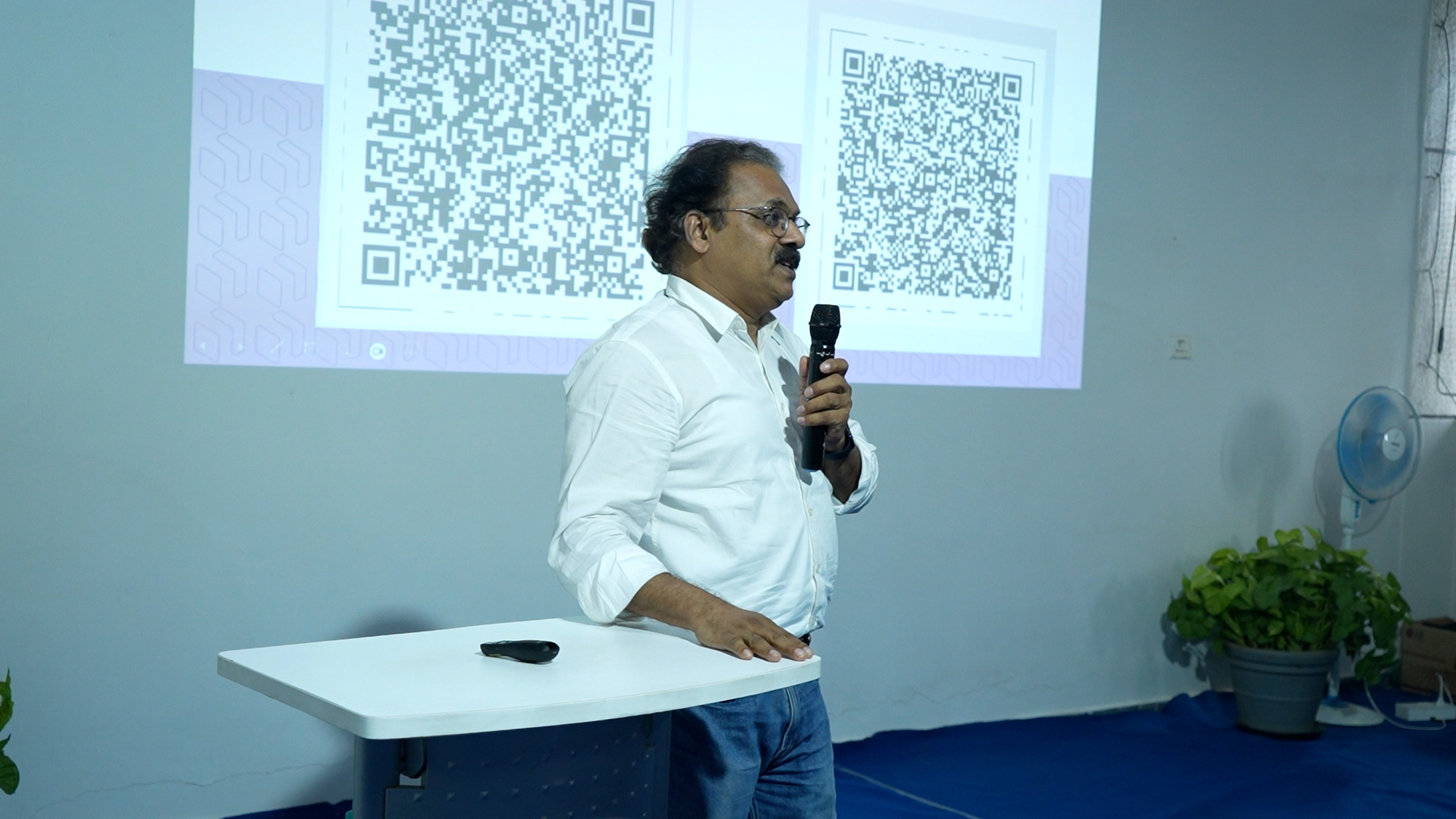
Piyush Gupta, Sameer, Amit, and Kedar were felicitated. The conversations that had been building through three hours of sessions spilled naturally into the networking over tea; engineers comparing notes, asking the questions they'd held through the talks, continuing the thread.
That's what a practitioner community looks like when it's working.
Stay tuned, the next SNIA India meetup is coming. Updates will be shared on the SNIA India.
FAQs
Q: What is the SNIA India T/E/N Storage Meetup?
T/E/N stands for Technical, Education, and Networking. It's a practitioner-focused event run by the SNIA India chapter — designed for storage engineers and infrastructure architects to exchange ideas, hear from industry experts, and connect with peers. No vendor pitches, no fluff. The May 2026 edition was hosted by Calsoft at their Pune office.
Q: What is KV cache and why does it matter for storage?
KV cache is the memory layer that stores key-value pairs during large language model inference — it's what allows AI systems to avoid recomputing context every time. As models scale, KV cache becomes a significant storage and memory architecture problem. Amit Gogate's session at the meetup made the case that no industry standard yet exists for how this tier should be managed, which is an open problem for storage vendors and SNIA working groups alike.
Q: What is content-aware storage?
Content-aware storage refers to systems that understand and act on the nature of the data they hold — not just the volume. Rather than treating all data uniformly, content-aware systems can classify, route, and manage data based on what it actually is. Kedar Karmarkar's session at the meetup argued this is where the storage industry needs to move, particularly as AI workloads grow more complex.