

Businesses across various industries increasingly depend on IoT devices to drive their daily operations, with many of these devices functioning independently in remote locations, far from direct IT support. Industries such as retail, transportation, and manufacturing are leading the charge in adopting and managing IoT technology to enhance efficiency and improve customer service.
According to a Fortune Business Insights report, the global IoT market is expected to grow by 25% annually, reaching over $1.8 trillion by 2028. This growth underscores the expanding role of IoT in modern business infrastructure. With the increasing reliance on IoT for business operations, ensuring strong security measures is essential to protect sensitive data, avoid unauthorized access, and maintain the integrity of entire networks.
You manage your network, and then one IoT device is compromised, putting the entire system at risk. Be prepared for that reality.
Most IoT devices lack adequate remote security measures, making them highly vulnerable to cyber-attacks. These could have devastating impacts, such as data theft or a network breach.
According to Kaspersky’s report, 48% of companies have experienced an increase in cyber-attacks. The problem lies at the heart of IoT device design—manufacturers prioritize connectivity over security. As the number of devices grows, so does your exposure to risk.
This blog highlights how to secure remote access to IoT devices and explores the challenges, strategies, and best practices necessary to keep IoT networks safe.
What is IoT Remote Access?
IoT remote access refers to managing, monitoring, and controlling IoT devices from a distant location. With IoT devices spread across homes, offices, and industrial sites, remote access allows users to interact with these devices via the internet or secure network protocols.
Why is Secure Remote Access for IoT Devices Important?
Secure remote access is essential because IoT devices often handle sensitive data, from personal information to critical operational data. Without strong security, devices can be compromised, leading to data loss, operational downtime, and safety risks. Ensuring only authorized users can interact with IoT systems prevents breaches and keeps networks stable.
Benefits of Remote Access to IoT Devices
- Convenience: Enables administrators to manage devices remotely, reducing on-site visits.
- Cost-Effectiveness: Lowers operational costs by minimizing travel and maintenance.
- Real-Time Monitoring: Provides instant insights into device status and performance.
- Scalability: Simplifies expansion across multiple sites through centralized control.
Understanding IoT Devices and Their Security Challenges
IoT devices connect to the internet to collect, transmit, and sometimes act on data. While they enhance efficiency, they also introduce significant remote access security risks.
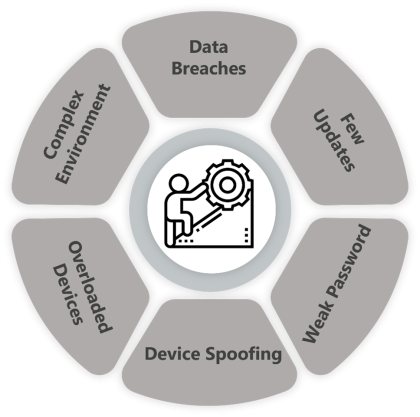
Here are some of the most common IoT security challenges:
- Default Weak Passwords: Devices often ship with simple passwords. Not changing them leaves your network exposed.
- Lack of Updates: Many IoT devices do not receive regular firmware updates, leaving known vulnerabilities unpatched.
- Data Breaches: Compromised devices can leak sensitive data, especially in healthcare and finance sectors.
- Device Spoofing: Attackers impersonate real devices to gain access and manipulate operations.
- Limited Resources: Most IoT devices lack the computing power needed for strong security controls.
- Complex Environments: IoT ecosystems vary widely, making consistent security policies difficult to enforce.
These challenges highlight the importance of implementing secure remote access mechanisms to protect IoT networks.
Fundamental Strategies for Securing Remote Access to IoT Devices
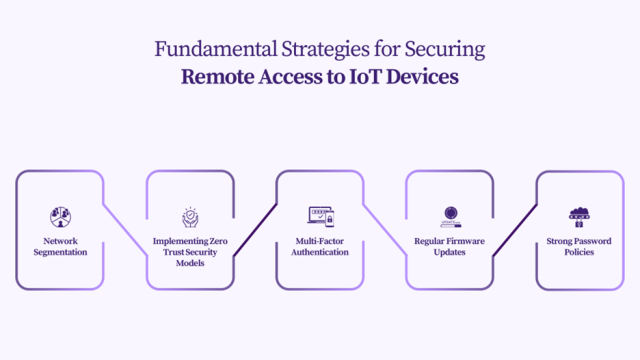
1. Network Segmentation
Divide your network into smaller zones to limit exposure in case of a breach. Even if one device is compromised, segmentation prevents attackers from moving laterally.
- Use VLANs to separate IoT devices from critical network areas.
- Implement firewalls between segments to control traffic.
- Limit access rights based on roles and necessity.
2. Implement Zero Trust Security
Zero Trust assumes no device or user is inherently trusted—each access request must be verified. This model reduces the risk of compromised IoT endpoints gaining access to sensitive systems.
- Authenticate every user and device attempting to connect.
- Apply least-privilege principles to restrict access.
- Continuously monitor device behavior for anomalies.
3. Multi-Factor Authentication (MFA)
MFA adds another layer of security by requiring multiple forms of verification before granting access. Even if passwords are compromised, unauthorized users cannot log in.
- Enable MFA for all remote IoT management systems.
- Use TOTP (Time-Based One-Time Passwords) or hardware keys for critical devices.
- Employ continuous authentication to secure active sessions.
4. Regular Firmware Updates
Regularly updating device firmware ensures protection from known vulnerabilities. Schedule automatic updates where possible to prevent oversight.
- Monitor vendor announcements for new firmware releases.
- Test updates in small batches before rolling them out network-wide.
- Automate updates for non-critical devices to ensure consistency.
5. Strong Password Policies
Use complex, unique passwords for each device and rotate them periodically to minimize exposure.
- Combine uppercase, lowercase, numbers, and symbols.
- Do not reuse passwords across devices.
- Set expiration policies and enforce password changes regularly.
Understanding Remote Access Solutions for IoT Devices
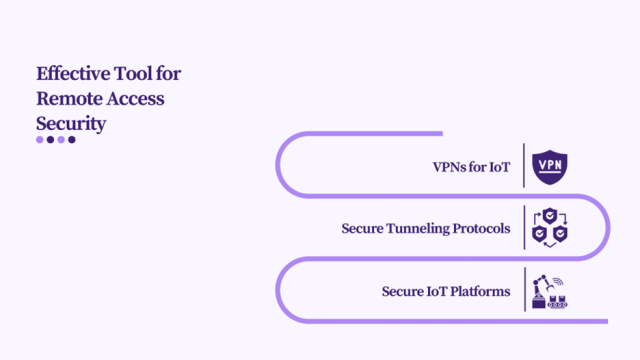
VPNs for IoT
Virtual Private Networks (VPNs) encrypt all communications between devices and networks, preventing unauthorized access and hiding device IPs from attackers.
Secure Tunneling Protocols
Protocols such as SSH (Secure Shell) and TLS (Transport Layer Security) ensure safe, encrypted communication between IoT devices and servers, blocking eavesdropping and tampering.
Secure IoT Platforms
These platforms combine VPNs, encryption, and real-time monitoring tools, allowing administrators to manage all IoT devices securely from a unified dashboard.
Monitoring and Incident Management in IoT Devices
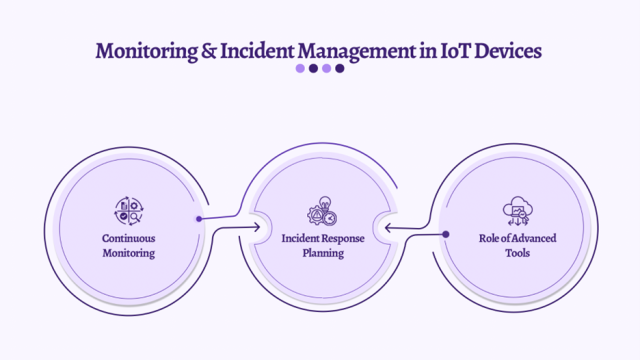
To maintain IoT security, organizations must implement continuous monitoring, proactive incident response, and advanced threat detection tools.
Continuous Monitoring
Since IoT devices constantly exchange data, continuous monitoring helps detect unusual behavior such as unexpected traffic surges or unauthorized connections.
Incident Response Planning
- Identify critical assets and their vulnerabilities.
- Establish detailed response procedures for various threat types.
- Assign clear roles and responsibilities for incident management.
- Test and refine your plan periodically.
Advanced Security Tools
Use tools powered by AI and analytics to identify unusual behavior patterns and stop threats before they escalate. Transition from reactive defense to proactive prevention.
Best Practices for IoT Devices Remote Monitoring
- Monitor device activity 24/7 and receive alerts for anomalies.
- Encrypt all data transmissions.
- Update monitoring tools regularly.
- Segment IoT networks to limit the blast radius of any breach.
- Audit and review security policies frequently.
- Use backups to preserve monitoring data.
- Train your team on incident response protocols.
Conclusion
Securing remote access to IoT devices is essential to safeguarding data integrity and network reliability in an increasingly connected world. As industries adopt IoT for critical operations, they must prioritize security to protect against breaches, ensure uptime, and maintain customer trust. Strong access control, encryption, and continuous monitoring are the pillars of IoT cybersecurity.
Calsoft’s IoT services portfolio offers comprehensive frameworks and digital solutions to help enterprises implement and manage secure, intelligent IoT systems.