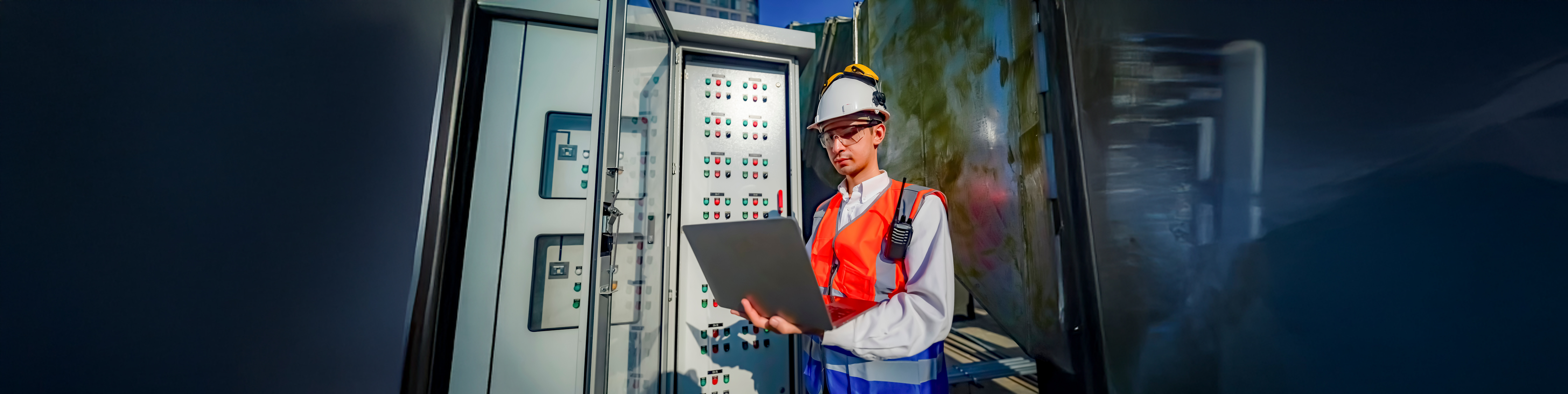
A field technician in Ohio gets a page. 2:47 a.m. A macro cell lost power four hours earlier. Nobody noticed. Then customers in three counties started calling in. By the time a truck rolls, the carrier has already incurred an SLA penalty, a churn risk, and a fix that should have taken 12 minutes in daylight, not 90 at night. This is not a software story. It is a timing story. Predictive maintenance models exist to fix exactly that kind of timing.
Where the downtime starts
Telecom networks don't fail all at once. They fail node by node. A tower here. A router there. A switch running hot for a week. Most of that equipment is already telling someone something. Rising temperature. A creeping error rate. A fan pulling more current than it did last month. The data exists. Nobody reads it in time. And every missed signal turns into the same thing downstream: a truck roll that didn't need to happen, a customer escalation that didn't need to start, an SLA report that didn't need a red line.
That gap shows up on a balance sheet too, not just a dashboard. Operators running on reactive alarms and calendar-based maintenance see 60 to 90 hours of unplanned downtime a year on their critical assets. Spare parts sit in a warehouse, or go missing the day a transformer needs one. Calsoft's predictive maintenance model development work closes that gap. It's part of a broader Data and AI practice built around AI-driven predictive orchestration: time-series models, LSTM, XGBoost, Prophet, trained on an asset's own history, not a generic curve. The same pipeline already runs for manufacturing lines, power utilities, and EV battery packs. Now it points at towers, switches, and core servers.
Why alarms and calendars don't stop it
Most NOCs already automated their alarms years ago. A threshold trips. A ticket opens. A technician gets dispatched. That's not prediction. That's the same reactive workflow in a faster uniform. It still only fires once degradation has started, which means the customer's clock started too. Preventive maintenance tries a different shortcut. Replace parts on a calendar instead of waiting for an alarm. It just trades one blind spot for another. Healthy parts get swapped early. Budget gets wasted. Parts that degrade faster than the schedule assumes still fail between visits.
Underneath both failed approaches is a messier problem. Most multi-vendor networks don't have one clean version of their own telemetry. Performance data lives in one system. Fault data in another. Configuration history somewhere else. None of them agree on units, or naming, or timestamps. No machine learning model can learn a failure signature from data that contradicts itself. This isn't a footnote. According to GSMA Intelligence, 2025, 79% of telecom network executives now rank network performance as their highest strategic priority. Ahead of every other initiative.
There's a version of this that doesn't run on guesswork at 3 a.m. It's mapped out, asset class by asset class, signal by signal. The whole build, from sensor to scheduled work order, fits in a one-pager. Hand it to whoever signs the budget.
What predictive maintenance models actually do
A working model earns its place by doing what a threshold alert can't. It puts a number on the failure. And a date. The output isn't yes or no. It's a risk score with a lead time attached. The kind that tells an engineer not just that something will break, but roughly when. Days out. Not minutes after a customer already noticed.
That distinction matters more than it sounds like it should. Full automation is the obvious next pitch. Every vendor in this space makes it eventually. Let the system fix itself. No human in the loop. So why hasn't anyone shipped that at scale? Even the operators furthest along on self-healing networks aren't there yet. "At this stage, full autonomy remains premature," says Ilhem Fajjari, a researcher at Orange. She points to misread signals. And decisions nobody can explain afterward. A risk score a human still approves isn't a compromise. It's the version that survives an audit.
None of this requires Calsoft to know your network better than your engineers do. It requires someone who already spent the months figuring out which signals predict a power amplifier failing, and which ones just mean a busy Tuesday. That work has been done once, on someone else's telemetry. It doesn't need redoing from zero. Most NOC teams are staffed to keep tonight's network up. Not to retrain models and chase false alarms as a second job.
Generative and agentic tooling is moving into network operations. The gap between operators who use it and those who don't matters most. GSMA Intelligence tracked a fourfold increase in commercial deployments of generative AI across telecom networks between 2023 and 2024 alone. The question isn't whether predictive maintenance models belong in that mix. It's whether your NOC finds out about the next failure from a sensor, or from an account manager fielding a churn threat.
FAQs
How is this different from standard network monitoring?
Monitoring tells you what's happening now. This tells you what's about to happen next. It learns an asset's own failure history, and forecasts the break days ahead. Work gets scheduled before the outage. Not dispatched after the call drops.
How soon do operators see results?
Most see fewer unplanned outages within two or three months. That's once telemetry is clean and the first models are trained on real history. Full coverage across a network takes longer. It depends on how messy the data was.
Does this replace the NOC team?
No. It works alongside the team. The model gives a risk score and a lead time. A person still decides what happens next. Full autonomy isn't something most operators trust yet. The goal is a sharper engineer. Not an empty seat.