

Recently, the telecom industry has been undergoing a digital transformation with the adoption of new technologies that transform the way telcos operate. One such key technology that has gained significant momentum is multi-cloud.
The telecom industry is rapidly adopting multi-cloud strategies, and it has become a de facto standard among business leaders and IT experts. They offer businesses a reliable and extensible foundation for digital transformation.
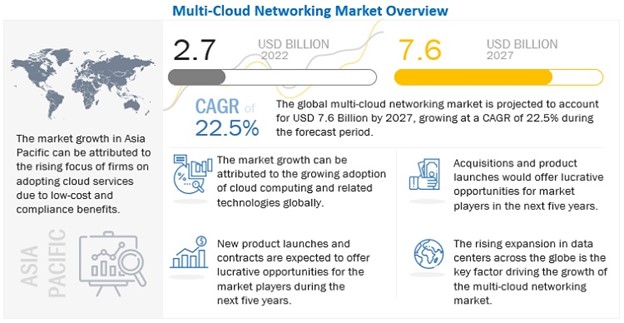
The adoption of a multi-cloud strategy enables telecom companies to optimize costs, enhance security, and comply with regulatory standards. Here are the key takeaways:
- A multi-cloud strategy helps telecom operators scale infrastructure and operations flexibly to meet demand.
- Using multiple cloud providers reduces vendor lock-in, improves service customization, and supports negotiation power.
- Distributed data centers enhance reliability, minimize downtime, and ensure consistent service delivery.
- Diversifying across platforms strengthens security and supports robust data protection.
- Cost-efficiency is achieved by leveraging the strengths of various cloud providers and optimizing resources.
Continue reading the blog to explore the main concepts of multi-cloud, the telco digital transformation supported by this model, and why telcos are increasingly adopting it. Additionally, learn the main benefits that multi-cloud offers to the telecom industry.
What is Multi-Cloud?
Multi-cloud simply involves employing multiple cloud services from different cloud computing providers (CCPs) to store data, run applications, and manage workloads across different cloud platforms.
In the telecom industry, ‘multi-cloud’ indicates using various cloud service providers to manage and operate telecom infrastructure and services.
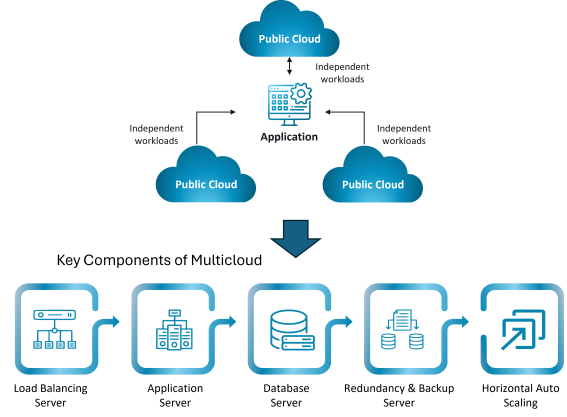
Using such a multi-cloud strategy, organizations can dynamically allocate resources from different cloud providers, ensuring a seamless user experience and preventing downtime.
Calsoft partnered with a customer to develop a unified application for managing resources across multiple clouds. This solution enhanced the user experience by enabling seamless management of various public cloud components, overcoming the learning curve. Additionally, integrated reports and analytics provided valuable insights for better comparison and planning.
Key Benefits of Adopting a Multi-Cloud Strategy
According to the Forrester Research Report, companies choose multi-cloud for many reasons, but the most popular ones include increased reliability (46%), digital transformation (43%), scalability (42%), and security and governance (41%).
How Multi-Cloud Strategy Impacts the Telecom Industry
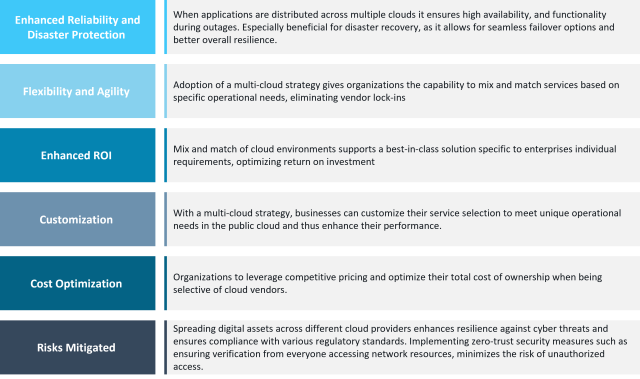
Three major benefits that telecoms have gained by adopting multi-cloud strategies into their infrastructure and services:
- Flexibility and Scalability: Telecoms use the strengths of different cloud providers to build an infrastructure that is more flexible and scalable, allowing easy scaling or reduction based on demand and no vendor lock-in.
- Resilience and Reliability: Telecoms can distribute their services and applications across multiple cloud providers, ensuring no dependence on a single PoC and continued operation during disruptions.
- Security and Compliance: Telecoms can protect against data breaches by distributing their workloads across different platforms and reducing cyber threat risks.
- Innovation and Time-to-Market: Multi-cloud enables telcos with diverse cloud services, accelerating innovation, reducing costs, enabling edge computing for faster service delivery, and providing a competitive edge to meet evolving customer needs.
However, the adoption of a multi-cloud strategy is not without challenges in the telecom industry.
One major challenge that most industries, including telecoms, face is interoperability and compatibility issues. Different cloud providers often have unique APIs, management tools, and service offerings, making seamless integration difficult. However, this limitation can be overcome by adopting standardized protocols and leveraging middleware solutions that bridge gaps between disparate systems.
Multi-Cloud in Telco Digital Transformation
Multi-cloud adoption is one of the key enablers of digital transformation, helping telecoms reduce costs, latency, and realize faster response times in the delivery of services.
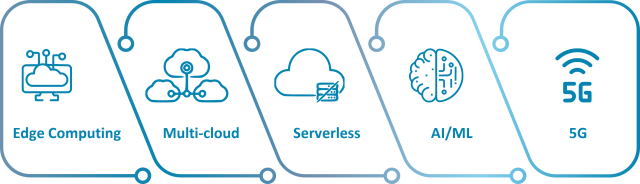
The key pillars of digital transformation with multi-cloud include:
- Edge computing and the Internet of Things (IoT): By processing data closer to the source, edge computing reduces latency and improves real-time decision-making. Telecoms adopting edge computing can thus offer more reliable and faster services, meeting the growing demand for low-latency applications. To get more insights into edge computing in the telco industry.
- Serverless computing: Focuses on individual workloads or modules rather than entire servers, reducing hardware requirements since modules run only when needed. This approach is cost-effective and ideal for managing fluctuating traffic loads in applications.
- 5G: Enhances network performance and enables telecom operators to efficiently implement multi-cloud strategies, delivering faster and more reliable services. Coupled with AI and Machine Learning (ML), telcos can analyze data for optimized resource allocation, improve decision-making, and dynamically scale operations, fostering innovation and competitiveness.
The Final Convergence
Thus, multi-cloud can give telecoms a competitive edge in the market and help them meet the changing needs of customers more quickly.
Calsoft specializes in high-performing networking and telecom product engineering services Network Transformation Solution. We assist and partner with industries in their digital transformative solutions to enhance networking capabilities for their customers. With our expertise in cutting-edge technologies, including AI and generative AI, we can assist you in adopting these transformative solutions to enhance networking capabilities for your customers. Partnering with industry leaders, we ensure our services are at the forefront of network transformation. Choose Calsoft for trusted expertise and success in the dynamic world of networking and telecom.