

Mobile World Congress (MWC) is the world’s largest exhibition for the mobile industry, bringing together leading mobile operators, device manufacturers, technology providers, and vendors from across the globe. The event features keynote speeches from industry leaders, showcases cutting-edge mobile technologies, and sparks discussions about the future of the telecom ecosystem.
MWC 2023, organized by Groupe Speciale Mobile Association (GSMA), wrapped up with more than 88,500 attendees from over 202 countries and territories — making it a truly global event. As MWC 23 concluded, it gave the telecom and technology sectors a clear direction on future innovations, products, and trends that will drive growth in 2023 and beyond.
The major focus of MWC 23 was on sustainability and the future of enterprise connectivity. In this article, Calsoft Research highlights the Top 10 Technology Trends from MWC 2023 and how these innovations will evolve in the coming years.
1. 5G Monetization
Monetizing the investment in 5G infrastructure is crucial for telecom operators to remain competitive. With 5G’s ultra-fast speeds and higher capacity, telcos can offer new services, target enterprise markets, introduce tiered pricing models, and expand into emerging industries like digital healthcare, education, and manufacturing.
Vodafone and Ericsson jointly showcased a cloud gaming and eSports demonstration featuring 5G Standalone, Network Slicing, and Exposure capabilities — key enablers for 5G monetization. These innovations enhance performance and open the network to new ecosystems such as gaming and media providers.
2. Satellite-Based Connectivity – A Key Enabler for Telcos
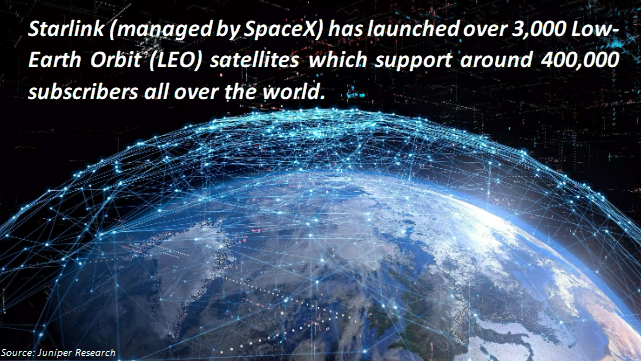
One of the key themes at MWC 23 was the role of satellite-based connectivity in bridging the digital divide. Satellite and Non-Terrestrial Networks (NTN) can deliver reliable connectivity to rural and remote regions without requiring expensive terrestrial infrastructure.
3. AI and the Metaverse
The Metaverse — a shared virtual world for social and business interaction — was among the hottest topics at MWC 2023. Artificial Intelligence (AI) plays a critical role in enabling and powering this immersive ecosystem.
AI enhances the realism of virtual environments by simulating physics, analyzing user behavior, and personalizing digital experiences. Together, AI and Metaverse will shape the next era of digital interaction and commerce.
4. vRAN Accelerating Open RAN Deployments
The Virtualized Radio Access Network (vRAN) enables open, scalable, and intelligent network architectures under the Open RAN framework. It fosters interoperability, reduces costs, and promotes vendor diversity.
At MWC 2023, Samsung and Vodafone announced plans to expand 5G Open RAN across Europe, beginning with Germany and Spain. Meanwhile, Juniper Networks demonstrated its RAN Intelligent Controller (RIC) on Vodafone’s network — showcasing enhanced service differentiation.
5. Edge-to-Cloud Computing
As IoT adoption accelerates, billions of connected devices are generating data at the network edge. Processing this data in real-time at the edge — instead of the core — reduces latency and improves efficiency. Edge-to-Cloud integration is becoming vital for seamless hybrid computing environments.
At MWC 23, Google and Microsoft unveiled updates to their edge and cloud solutions. Google introduced new features for Google Distributed Cloud (GDC) Edge, enabling service providers to deploy cloud-native networks in hybrid cloud environments.
6. Private Networks Powering Industry Verticals
Private 5G networks are gaining traction across industries such as manufacturing, logistics, and healthcare. They offer secure, low-latency, and high-reliability connectivity for mission-critical operations. Enterprises are increasingly adopting standalone Private 5G networks to support Industry 4.0 initiatives.
Private 5G, combined with technologies like MEC, Open RAN, and automation, will drive digital transformation and enable enterprises to deploy next-generation services flexibly.
7. Sustainability in 5G Network Rollouts
With 5G networks forming the backbone of the digital economy, sustainability has become a key priority. As the demand for data rises, the industry must address the environmental impact of large-scale network deployments. Practices such as network virtualization, green energy adoption, and circular economy models are helping operators achieve eco-friendly operations.
8. The Dawn of 6G Technology
Although 5G is still being rolled out globally, research on 6G is well underway. The next-generation network is expected to offer speeds up to 100x faster than 5G, with lower latency and ultra-reliable communication. 6G will power futuristic use cases such as holographic communications, tactile internet, and AI-driven automation.
9. Wi-Fi 7 and Standalone Networks Shaping Private 5G
Non-cellular technologies like Wi-Fi 7 are expected to complement 5G networks, especially in enterprise environments. Wi-Fi 7 will enhance speed, capacity, and reliability, supporting seamless connectivity and hybrid deployment models.
At MWC 23, ZTE introduced its new 5G Fixed Wireless Access (FWA) flagship device supporting the latest Wi-Fi 7 standards — highlighting convergence between Wi-Fi and cellular networks.
10. eSIMs – The Emerging Trend in IoT
As IoT adoption grows, the need for flexible and secure connectivity is expanding. eSIMs (embedded SIMs) allow devices to switch networks without physically changing SIM cards, simplifying management and improving scalability.
In the IoT ecosystem, eSIMs offer improved security, lower costs, and better global connectivity — enabling seamless transitions between networks in regions with variable coverage.
Wrapping Up
MWC 2023 was a showcase of innovation, collaboration, and sustainability. Key takeaways — including Private 5G, AI, and the Metaverse — will redefine the telecom landscape in the years ahead. The event highlighted how digital transformation and sustainability must evolve together to drive the next era of connectivity and growth.