
.jpg)
Is the current supply chain prepared to handle market fluctuations? Inefficient planning risks disruptions and excess inventory. Research by McKinsey indicates that businesses leveraging AI and ML in their supply chains can reduce logistics costs by 15%, inventory levels by 35%, and enhance service levels by 65%.
MLOps significantly contributes to this optimization by efficiently processing vast amounts of data, refining model development, and ensuring continuous monitoring. By integrating MLOps, supply chains benefit from enhanced forecasting, demand sensing, and automated decisions, leading to improved operational performance.
This blog delves into how MLOps is shaping the future of supply chain management, highlighting key use cases and strategies for successful implementation.
What is MLOps?
MLOps, or Machine Learning Operations, refers to practices that enable the management and automation of the ML model lifecycle. It ensures that ML models transition smoothly from development to production, optimizing performance across your supply chain.
Core Components:
- Data Management: Gathering and cleaning data is crucial to ensure accuracy and consistency. Versioning the data helps maintain traceability throughout the lifecycle.
- Model Development: During this phase, machine learning models are trained using different algorithms. Tracking model versions helps compare results and choose the best-performing model.
- Model Deployment: After training, the model is packaged and deployed into a live environment.
- Monitoring and Maintenance: Continuous monitoring helps detect issues like model drift and maintain performance.
Now, let’s examine the role of MLOps in Supply Chain Management.
The Role of MLOps in Supply Chain Management
MLOps is key to transforming supply chain management. When you integrate machine learning models, you can streamline operations and automate tasks like demand forecasting and inventory management.
With MLOps, you can continuously monitor model performance and adapt to market changes to ensure reliability. Ultimately, MLOps improves efficiency and agility, positioning you for success in a competitive market. The following image highlights key benefits of MLOps in Supply Chain Management.
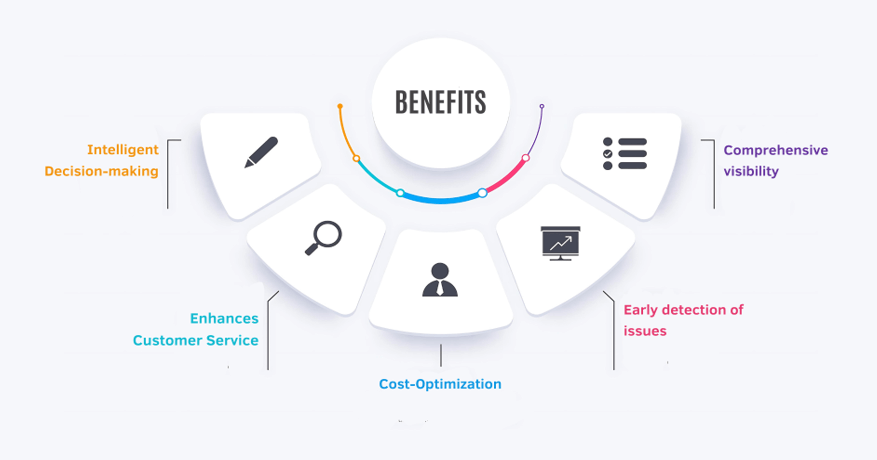
- Increased Agility: Real-time analytics and automated updates identify shifts in market conditions and adjust forecasts accordingly.
- Improved Compliance and Governance: Automated monitoring and validation ensure compliance and maintain audit documentation.
- Managing Supply Chain Complexity: Data integration consolidates information from multiple sources to provide a comprehensive view.
- Adapting to Market Demands: Predictive analytics analyze historical and current data to adjust operations proactively.
- Ensuring Model Reliability: Continuous monitoring and retraining mitigate model decay and ensure consistent accuracy.
Steps for Implementing MLOps in Supply Chain
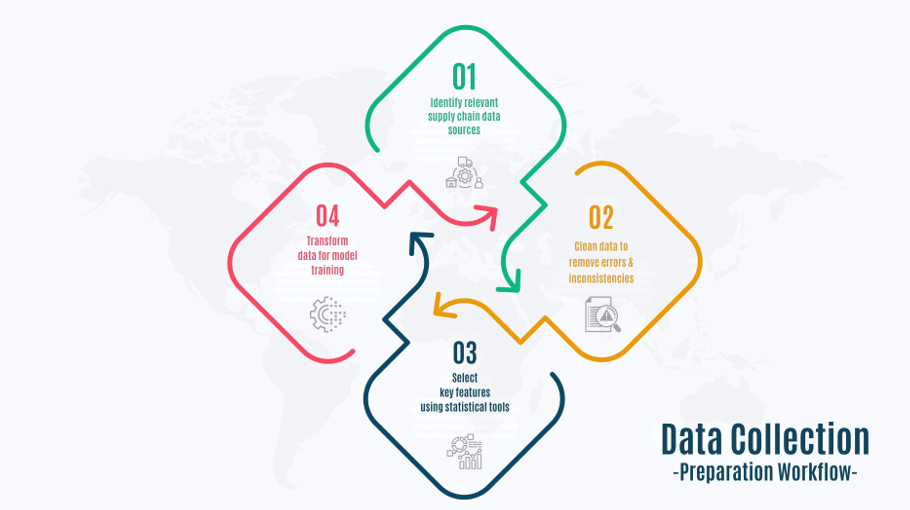
Integrating MLOps into supply chain management requires a structured approach focused on data quality, model development, continuous monitoring, and integration with existing systems.
1. Data Collection and Preparation
Accurate, relevant, and complete data is key. Data can come from various sources such as sales records, inventory logs, supplier data, and customer behavior patterns.
Techniques:
- Remove errors, duplicates, and inconsistencies in data.
- Identify relevant features that impact model predictions using statistical analysis and domain expertise.
- Transform data into analysis-ready formats (normalization, encoding, etc.).
2. Model Development and Deployment
Different supply chain tasks require different models:
- Time Series Models: For forecasting demand or trends.
- Regression Models: For predicting continuous variables.
- Classification Models: For categorization (e.g., stockout risk).
Best Practices:
- Package models using Docker for consistent deployment.
- Use CI/CD pipelines for automated testing and deployment.
- Set up real-time monitoring with feedback loops.
3. Continuous Monitoring and Retraining
Models can degrade over time due to data changes. Monitoring and retraining help maintain accuracy.
- Set thresholds that trigger retraining when performance drops.
- Automate retraining using the latest data.
- Redeploy validated models to ensure consistent accuracy.
4. Integration with Existing Systems
Use APIs to connect ML models with supply chain tools. Modular integration ensures scalability and smooth upgrades.
- Compatibility: Ensure MLOps tools fit your tech stack.
- Scalability: Use cloud-based frameworks for flexibility.
Use Cases of MLOps in Supply Chain
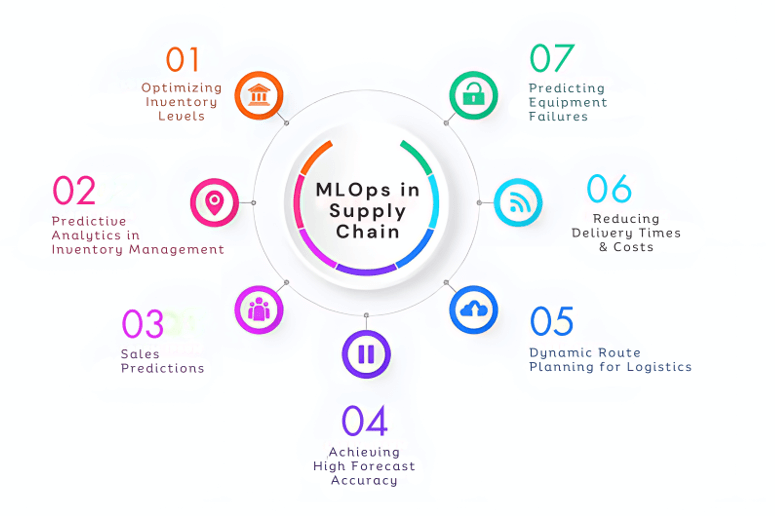
MLOps is revolutionizing supply chain management through data-driven automation. Here are key use cases:
Optimizing Inventory Levels
- Analyze real-time sales data to predict demand.
- Adjust inventory dynamically to prevent stockouts and overstocking.
Predictive Analytics in Inventory Management
- Use historical and behavioral data to predict inventory needs.
- Integrate predictive models with inventory systems for proactive planning.
Sales Predictions
- Collect and analyze data on sales trends, market conditions, and seasonality.
- Build models that forecast sales and update continuously with new data.
Achieving High Forecast Accuracy
- Use advanced analytics for demand forecasting.
- Integrate models with sales systems and refine via feedback loops.
Dynamic Route Planning for Logistics
- Analyze traffic, weather, and schedules to plan efficient routes.
- Continuously monitor routes and adjust models for optimal delivery times.
Predicting Equipment Failures
- Integrate sensors to collect machinery data.
- Develop models to detect early failure signs.
- Set predictive alerts and schedule maintenance proactively.
For instance, in the automobile industry, MLOps enables better inventory forecasting, logistics optimization, and predictive maintenance—resulting in reduced costs and improved efficiency.
Best Practices of MLOps in Supply Chain Management
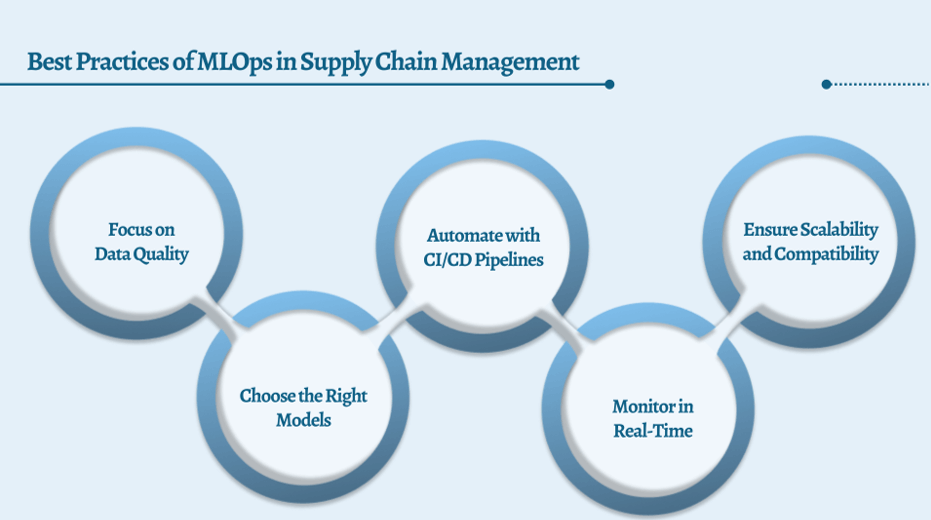
To implement MLOps effectively, follow these best practices:
- Focus on Data Quality: Collect accurate, complete, and clean data before training models.
- Choose the Right Models: Match model type to task and validate with real-time data.
- Automate with CI/CD Pipelines: Streamline deployment and reduce human error.
- Monitor in Real Time: Continuously track model performance and address drift immediately.
- Ensure Scalability and Compatibility: Design MLOps frameworks that grow with business needs.
Parting Thoughts
Incorporating MLOps into supply chain management offers transformative benefits—accurate forecasting, optimized logistics, and proactive inventory management. By leveraging ML for predictive insights, businesses enhance efficiency, minimize risks, and remain competitive in dynamic markets. MLOps ensures resilient, scalable operations and positions companies for long-term success.
Calsoft, with its deep domain expertise and established processes, provides targeted solutions that are both secure and smart—to help supply chains digitally transform the way they do business.