
Peter Drucker, the father of modern management, famously said, “Do what you do best and outsource the rest.” According to Statista and KPMG, around 49.6% of companies said they wanted to increase their IT outsourcing share, while only 10.4% wanted to reduce outsourcing activities. These numbers indicate growth in the IT outsourcing market.
A decade ago the primary reason to outsource was cost savings. Today, businesses outsource to access specialized provider offerings and concentrate on core capabilities. Outsourced product development has endured because it provides access to talent, global opportunities, and competitive pricing.
Reasons to Outsource Product Development Services
In a digital era of rapid technological change, outsourcing product development services is a popular option for companies that want to remain competitive while controlling costs. Outsourcing accelerates development, gives access to specialized skills, and helps bring innovative products to market faster.
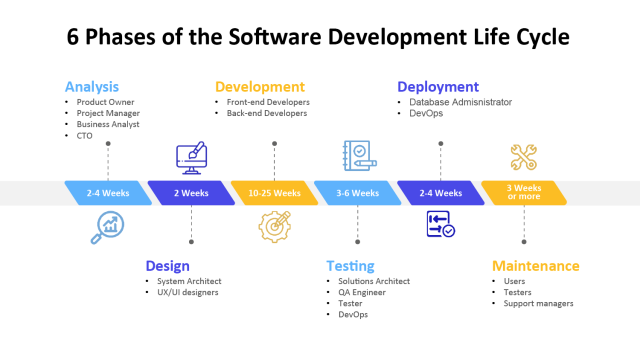
The product development lifecycle typically has six phases. Complexity depends on technology, skillsets, resources, and timelines. Custom software development commonly takes more than four months, making outsourcing a feasible solution.
- Wider talent pool: Outsourcing provides access to specialists in front-end, UX/UI, QA, testing, and more.
- Reduced development costs: Outsourcing lowers overhead and lets you leverage external teams for full development or MVP builds.
- Faster time to market: Experienced vendors accelerate delivery and give you a competitive edge.
- Enhanced product quality: Skilled teams deliver refined design, better UX, and higher-quality features.
- Reduced risk of failure: Vendor expertise helps mitigate design flaws, defects, and recalls.
Businesses may choose onshore, nearshore, or offshore models depending on cost, culture, and time-zone tradeoffs.
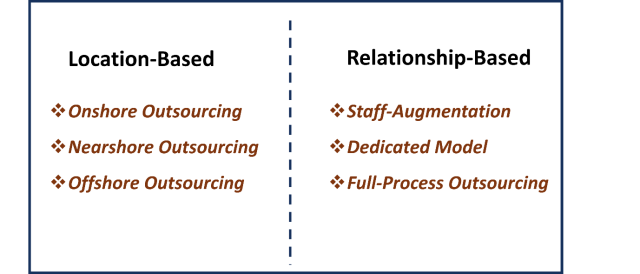
Location-based Outsourcing Models
- Nearshore: Vendor in a nearby country — lower travel time, similar culture, convenient time zones.
- Offshore: Vendor in a distant country — higher cost savings but potential language/time-zone challenges.
- Onshore: Vendor in the same country — best communication and cultural alignment but typically higher cost.
Relationship-based Outsourcing Models
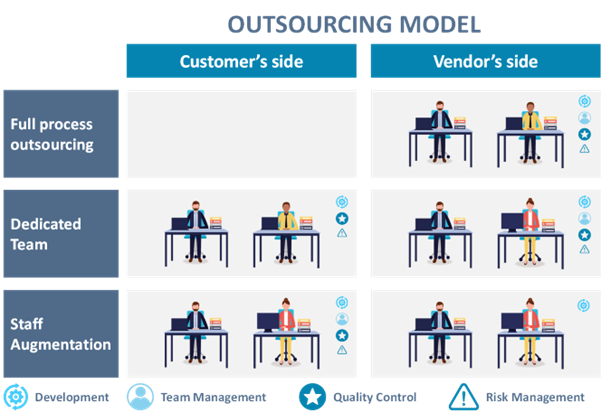
- Staff augmentation: Temporarily add skilled resources to your team to improve agility without long hiring cycles.
- Dedicated model: Long-term engagement where a vendor provides a dedicated external team to operate like an extension of your organization.
- Full-process outsourcing: Vendor assumes end-to-end responsibility — from design to delivery — letting the client focus on core business.
Choosing technologies, processes, automation, and the right partner are critical to accelerate product releases.
Tips to Choose the Right Product Development Outsourcing Partner
Startups and enterprises often outsource to save costs, improve speed-to-market, access tools/processes, and gain flexibility. Here are practical tips based on Calsoft’s experience working with Fortune 500 clients.
Top ten tips
- Define your requirements: Prepare a clear project scope with objectives, timelines, deliverables, and technical specifications to evaluate vendors effectively.
- Assess expertise: Review vendor portfolios, industry experience, technical capabilities, and client testimonials.
- Make budget estimates: Set realistic budgets to avoid overruns and select partners that provide best value for money.
- Focus on QA: Evaluate the vendor’s QA and testing processes to ensure robust bug detection and resolution practices.
- Review past performance: Check references and past projects to verify on-time delivery and quality.
- Assess communication and project management: Confirm they use modern methodologies (Scrum/Agile) and have clear communication channels.
- Define KPIs and reporting metrics: Agree on measurable KPIs (e.g., sprint burnout, story points retired, lines of code metrics) and reporting cadence.
- Compare pricing: Choose vendors that offer best value; cheapest is not always best.
- Consider location: Factor in culture, language, and time zones when selecting nearshore/onshore/offshore partners.
- Risk mitigation: Verify the vendor’s approach to security, audits, incident response, and business continuity planning.
Following these steps helps organizations find partners that meet business objectives and deliver measurable results.
Conclusion
Outsourcing product development gives companies access to a broader talent pool, flexible resourcing, and potential cost savings while accelerating innovation. With the right strategy and partner, businesses can remain competitive and scale product initiatives efficiently.
Calsoft is a technology-first partner with extensive product engineering services. We support clients across design, development, and managed services — specializing in storage, networking, virtualization, cloud, IoT, and AI/ML. If you’re evaluating product engineering partners, consider how deep domain expertise, proven processes, and a track record with global ISVs can accelerate your roadmap.