Entering the World of Mixed Reality
“Technology Evolution to Lead a Better Life.”
The term Mixed Reality (MR) describes the blending of the physical and digital worlds. It enables the layering of digital elements that interact seamlessly with real-world environments.
Unlike Augmented Reality (AR)—a partially digital experience—or Virtual Reality (VR)—a completely digital one—Mixed Reality offers the best of both worlds. MR allows users to interact with physical and digital elements simultaneously, beyond the limits of a screen. To make this possible, MR technology captures data from the physical environment to render digital components accurately.
What Sets AR, VR, and MR Apart?
| Augmented Reality (AR) | Virtual Reality (VR) | Mixed Reality (MR) |
|---|---|---|
| Digital elements are superimposed on the real world but do not interact with it directly. | The user’s surroundings are completely replaced by a digital environment. The user interacts only with the virtual world. | The user interacts with both digital and real-world objects simultaneously in an immersive environment. |
How Does Mixed Reality Work?
Mixed Reality is powered by advanced technologies such as AI sensors, cameras, GPUs, and core processors that analyze and store 3D data. The more capable the device, the more realistic the MR experience becomes.
Users connect MR devices to wired or wireless consoles that generate virtual content. These devices can move, duplicate, or add digital elements around the user in real time.
To create realistic MR experiences, strong input sensors and software development kits (SDKs) are essential. If the input sensors fail, the immersive experience is disrupted.
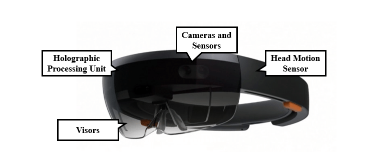
An Example of an MR Device
(Source: researchgate.net)
Real-World Examples of Mixed Reality
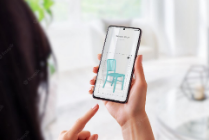 |
MarketingCustomers can virtually experience and interact with a company’s products or services through MR headsets before making a purchase. |
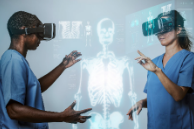 |
HealthcareMixed Reality is used to visualize real human anatomy as holograms for medical education and surgical simulations, making it a powerful learning tool for doctors and students. |
MR is also transforming other industries, including:
- Education
- Fitness Training
- Entertainment
- Construction Sites
- Video Calls and Collaboration
Benefits of Mixed Reality
- Enhanced Customer Experiences: MR and AI help brands offer immersive, unforgettable product experiences.
- Widespread Adoption: Popular AR filters on Instagram and Snapchat are examples of MR in everyday use, showcasing how accessible the technology has become.
Challenges of Mixed Reality
- High upfront development costs for MR applications and devices.
- Some users may find MR headsets uncomfortable or disorienting during prolonged use.
Types of MR Devices
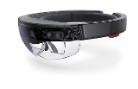 |
Holographic DevicesThese devices feature see-through displays that allow users to view the physical world while overlaying digital content. |
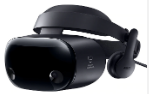 |
Immersive DevicesThese devices use opaque displays that block out the physical world entirely, immersing the user in a digitally rendered environment. |
Final Thoughts
The future of Mixed Reality promises profound transformations across industries and daily life. As the technology evolves, it will enhance productivity, save time, and make complex tasks more enjoyable and efficient.