
Most enterprises now run data pipelines across AWS, Azure, and GCP to improve flexibility, scalability, and avoid vendor lock-in. The key strategy is to use the best services from each cloud and stay agile. But in execution, the costs often become harder to track. Network latency, data movement, resource usage, and different pricing models across cloud providers can quietly increase cloud spend, making them difficult to explain and even harder to control.
Industry studies indicate that inefficient orchestration can increase cloud data processing costs by 30–40%, making data modernization a critical business initiative rather than a technology upgrade.
This is why data modernization is becoming a business priority, not just a technology upgrade. Modern data platforms must support distributed workloads, streaming data, AI workloads, and real-time analytics without allowing orchestration complexity to increase cost. The goal is to move the right data, run the right workload in the right environment, and make every pipeline cost-aware. Why multi-cloud data pipelines become expensive Legacy data platforms were built for centralized environments. In today’s multi-cloud environments, the same design often creates fragmented ETL pipelines, duplicated datasets, overprovisioned compute clusters, inconsistent access controls, and limited visibility into pipeline performance.
These issues may not break the pipeline, but they create hidden operational costs. Data may be copied across clouds when it could be processed closer to the source. Compute clusters may stay active longer than needed. Retry logic may trigger additional resource consumption. Storage may grow because teams keep multiple versions of the same dataset. Without pipeline-level cost tracking, engineering and finance teams often see the cloud bill only after the cost has already increased.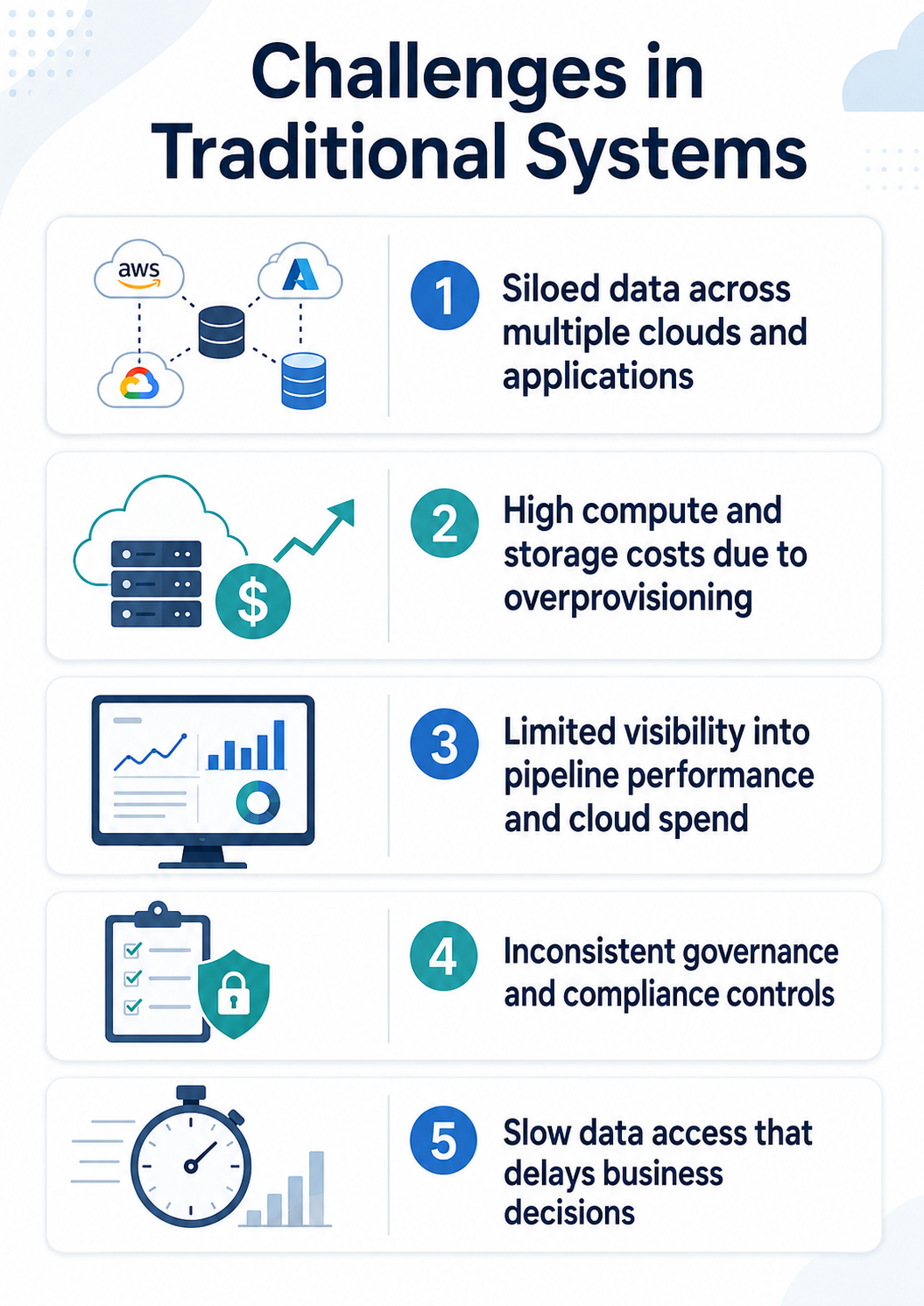
How data modernization improves orchestration
Data modernization helps solve this by redesigning the data foundation for orchestration, observability, governance, and cost efficiency. At the core of modern data orchestration is a simple principle: move less data, process it closer to where it stays, and make every pipeline cost-aware.
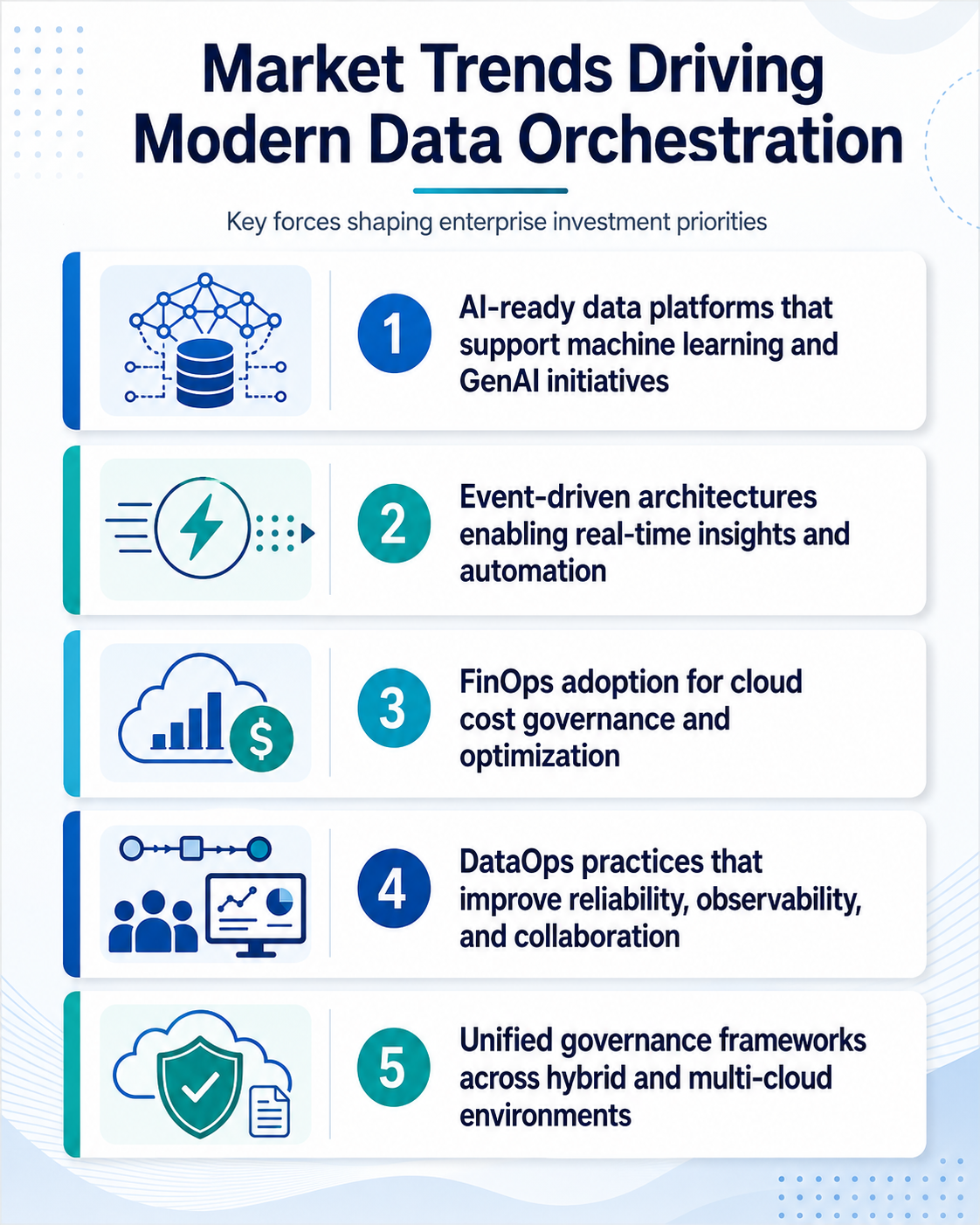
A modernized data platform should also introduce a unified control plane across multi-cloud environments. This control plane connects pipeline scheduling, metadata management, monitoring, access control, and cost attribution. It gives engineering, finance, and business teams a shared view of what data is being processed, where it is moving, how much it costs, and whether the business value justifies the spend. Calsoft helps enterprises modernize data orchestration by designing cost-aware, scalable, and governed data pipelines across cloud environments. The capability extends across commonly used orchestration tools such as Apache Airflow, Prefect, Azure Data Factory, AWS Step Functions, and GCP Workflows. By optimizing triggers, concurrency, retry logic, resource tagging, region-aware execution, and cost-based scheduling, Calsoft helps enterprises reduce idle compute, control cloud spends, improve pipeline reliability, and align data operations with business outcomes.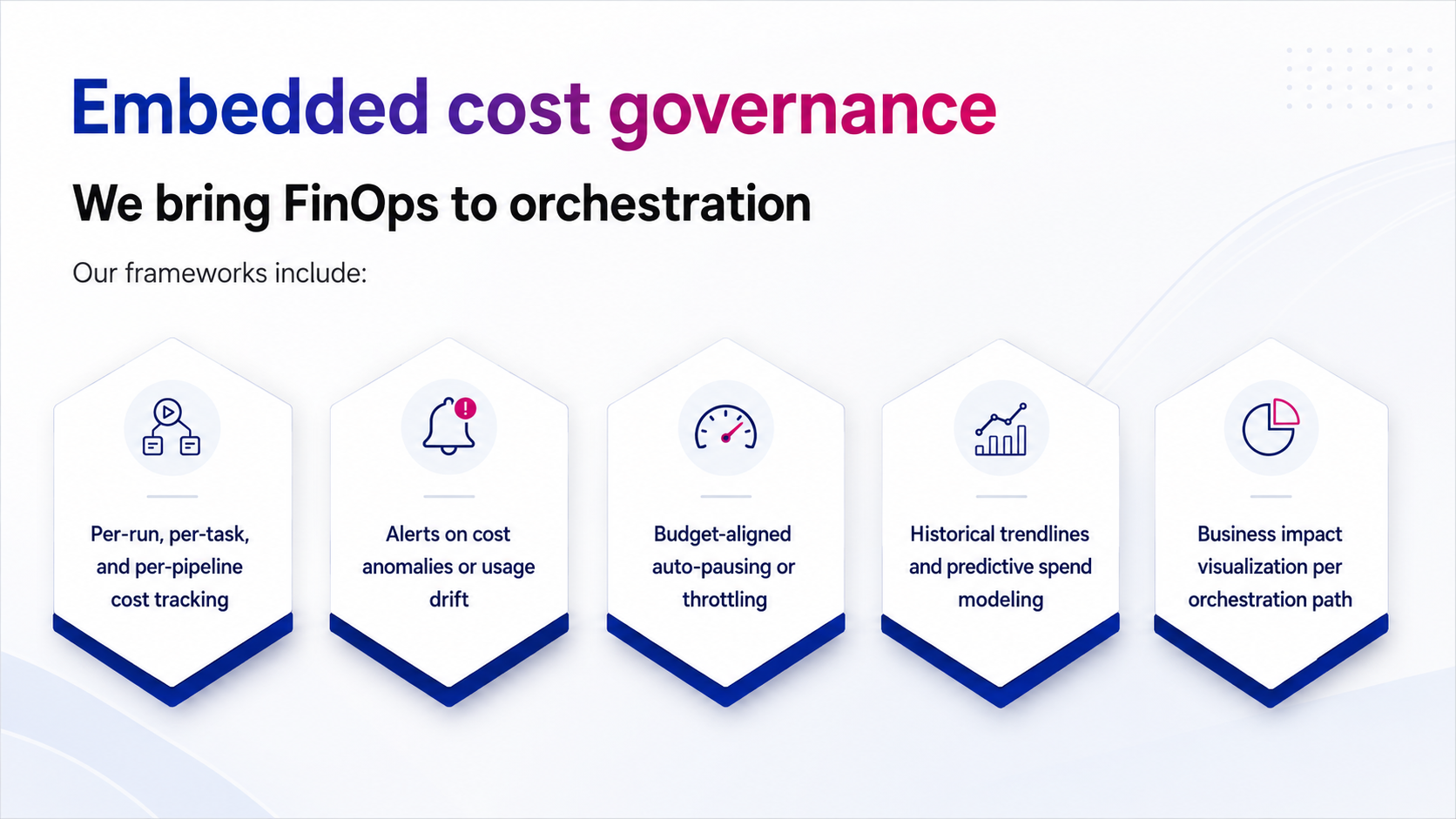
FinOps-led orchestration helps enterprises control cloud spend at the pipeline level. Calsoft embeds cost tracking, anomaly alerts, throttling, predictive spend modeling, and business impact visibility into orchestration workflows, helping teams reduce waste, manage usage drift, and align data operations with business priorities.
For enterprises modernizing real-time data pipelines, platform choices also impact performance and cost. Calsoft’s StreamNative Cloud vs Amazon MSK benchmark explores how streaming infrastructure decisions affect throughput, latency, and operational efficiency.
Building an intelligent data operating model
The goal of data modernization is not just to reduce cloud spend. It is to build an intelligent data operating model where every workload has context, every dataset has ownership, and every movement of data has a reason. For enterprises operating across AWS, Azure, and Google Cloud, cost optimization cannot be an afterthought. It must be built into the architecture of data orchestration itself. By modernizing the data layer, organizations can reduce unnecessary data movement, improve pipeline reliability, strengthen governance, and make multi-cloud environments easier to manage. Multi-cloud success does not come from using more cloud services. It comes from orchestrating data intelligently across them.
FAQs
1. What is cost-optimized data orchestration?
Cost-optimized data orchestration means planning and running data pipelines in a way that reduces unnecessary cloud spend while maintaining performance, reliability, and scalability.
2. Why is FinOps important in data orchestration?
FinOps helps teams track pipeline-level costs, detect usage drift, control budget overruns, and make cloud spending more predictable across multi-cloud environments.
3. How does data modernization help in multi-cloud environments?
Data modernization improves visibility, governance, automation, and workload placement, helping enterprises reduce data movement, avoid overprovisioning, and manage pipelines more efficiently.