
Enterprises on their digital transformation journey increasingly adopt a cloud-first framework. While cloud technology enhances business agility, it also introduces complex security challenges. Securing workloads in the cloud differs significantly from protecting on-premises environments. To safeguard cloud data, organizations must implement a comprehensive cloud security strategy — one that protects applications and information against cyber threats and breaches.
As of January 2024, the Google Cloud Platform (GCP) market alone offered 553 security solutions, highlighting the growing range of options to enhance cloud protection.
According to the CrowdStrike 2024 Global Threat Report, intrusions in cloud environments have surged by 75%, with a 110% year-over-year rise in “cloud-conscious” threat actors. This makes a robust cloud security framework indispensable for every enterprise.
This blog explains the fundamentals of cloud computing, explores the challenges in cloud security, and guides you through building a secure and resilient cloud security strategy.
What is Cloud Computing?
Cloud computing delivers computing services — including servers, storage, databases, networking, analytics, and intelligence — over the internet (“the cloud”). It allows businesses to innovate faster, scale efficiently, and optimize costs.
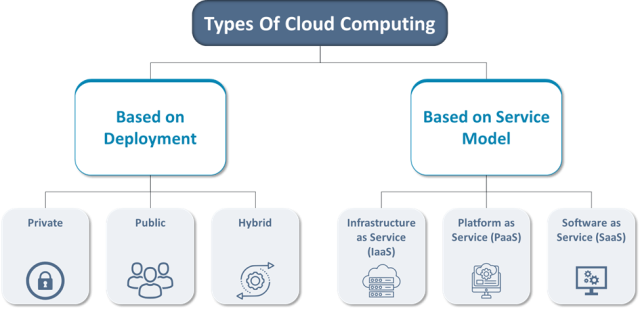
Cloud services operate across three main models:
- Infrastructure as a Service (IaaS): Provides virtualized computing resources online.
- Platform as a Service (PaaS): Offers a platform for developers to build applications.
- Software as a Service (SaaS): Delivers ready-to-use applications accessible over the web.
As your business expands, the cloud scales seamlessly to handle increased workloads without heavy investment in physical infrastructure.
Types of Cloud Environments
Choosing the right cloud environment is crucial for efficiency, cost control, and security. Below is an overview of the four primary cloud environments.
| Cloud Environment Type | Description | Benefits |
|---|---|---|
| Public Cloud | Third-party vendors provide cloud services over the Internet, shared by multiple organizations. |
|
| Private Cloud | Dedicated cloud infrastructure for a single organization, hosted on-premises or by a provider. |
|
| Hybrid Cloud | Combines public and private clouds, allowing data and apps to move between them. |
|
| Multi-Cloud | Uses multiple cloud providers to avoid dependency on a single vendor. |
|
Now that we understand cloud environments, let’s explore the essentials of cloud security and how to establish an effective strategy.
Understanding Cloud Security
Cloud security involves protecting data, applications, and infrastructure in the cloud from unauthorized access, breaches, and other threats. Think of it as a digital vault safeguarding valuable assets in a shared environment.
Why Cloud Security Strategies Are Crucial for Businesses
- Regulatory Compliance: Ensures adherence to laws like GDPR, HIPAA, and CCPA, preventing penalties and data misuse.
- Business Continuity: Prevents disruptions — with average data breaches costing $4.45 million (Statista 2024).
- Customer Trust: Builds confidence in your brand, increasing loyalty and retention.
- Competitive Advantage: Strong security differentiates you from competitors and enhances your market reputation.
Statista projects that the global cloud security market will reach $147.45 billion by 2031, underlining its growing business importance.
7 Steps to Building a Successful Cloud Security Strategy
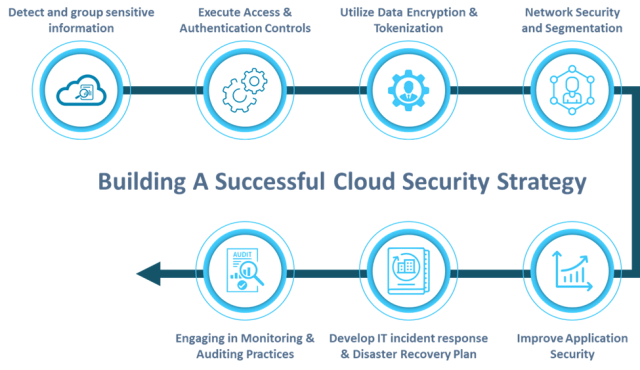
Step 1: Identify and Classify Sensitive Data
Locate critical data such as personal information, financial details, and intellectual property. Categorize it based on sensitivity to apply appropriate protection levels.
Step 2: Implement Access and Authentication Controls
Ensure only authorized users can access cloud resources. Use strong passwords, Multi-Factor Authentication (MFA), and role-based access controls.
Step 3: Use Data Encryption and Tokenization
Encrypt sensitive information both at rest and in transit, and replace confidential data with non-sensitive tokens to prevent unauthorized access.
Step 4: Strengthen Network Security and Segmentation
Segment networks to limit the spread of potential breaches. Use firewalls, VPNs, and application-layer controls to secure communication between workloads.
Step 5: Enhance Application Security
Integrate security throughout the software lifecycle. Conduct vulnerability scans, penetration tests, and secure code reviews to identify and fix risks.
Step 6: Develop Incident Response and Disaster Recovery Plans
Establish a Security Incident Response Team (SIRT) and a Disaster Recovery Plan (DRP) to minimize damage during security breaches or downtime.
Step 7: Continuous Monitoring and Auditing
Monitor cloud systems regularly and conduct audits to maintain compliance. Identify anomalies early to prevent data integrity issues.
Key Elements of a Cloud Security Strategy
- Identity and Access Management (IAM): Manage permissions to ensure only verified users access data.
- Visibility: Maintain a real-time view of assets, workloads, and security configurations.
- Encryption: Secure data in transit and at rest using strong cryptographic methods.
- Micro-Segmentation: Limit exposure by isolating workloads and network zones.
- Automation: Automate detection, response, and compliance processes to reduce human error.
- Cloud Security Monitoring: Use Cloud Security Posture Management (CSPM) tools to track and manage vulnerabilities.
- Secure Data Transfers: Use HTTPS and TLS/SSL protocols to protect information during transmission.
Foundational Principles of Cloud Security
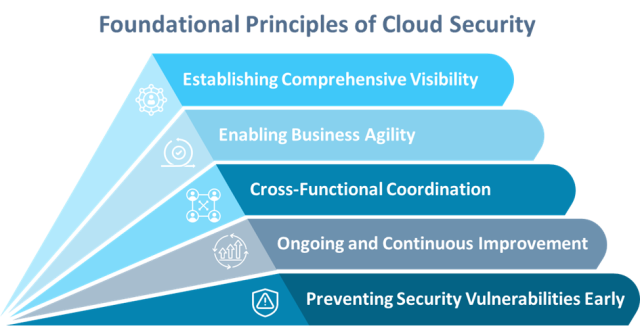
1. Establish Comprehensive Visibility
Gain full insight into your cloud infrastructure to monitor configurations, data flow, and potential vulnerabilities.
2. Enable Business Agility
Integrate security with business processes to ensure agility without compromising protection.
3. Encourage Cross-Functional Collaboration
Involve all teams — security, DevOps, and IT — in safeguarding applications and workflows.
4. Continuous Improvement
Treat security as an evolving process with regular reviews, audits, and lessons learned from incidents.
5. Prevent Vulnerabilities Early (Shift-Left)
Integrate security at the earliest development stages. Use dependency scanning, code analysis, and continuous validation to minimize risks.
Challenges in Cloud Security
| Challenge | Problem | Solution |
|---|---|---|
| Complexity and Integration | Integrating security across hybrid or multi-cloud environments can be daunting. | Standardize policies and use automation tools to synchronize protocols. |
| Human Error and Insider Threats | Misconfigurations and weak access controls lead to breaches. | Implement IAM, train employees, and monitor access continuously. |
| Evolving Threat Landscape | Threats evolve rapidly, demanding constant adaptation. | Adopt AI-driven tools and regular patching to stay ahead. |
| Cost Management | Balancing strong security with limited IT budgets. | Use scalable, automated security tools to manage costs effectively. |
Best Practices for Implementing a Cloud Security Strategy
- Adopt a Security-First Mindset: Make security the foundation of every cloud decision.
- Employee Training: Conduct regular awareness programs and phishing simulations.
- Use AI and Automation: Employ automated monitoring, response, and threat detection.
- Engage Experts: Collaborate with experienced cloud security professionals.
- Stay Updated: Keep up with evolving cloud vulnerabilities and compliance standards.
In Summary
Building a robust cloud security strategy demands balance — combining flexibility with uncompromising protection. By embedding principles like encryption, segmentation, automation, and monitoring, enterprises can create a resilient cloud security framework that ensures compliance and accelerates innovation.
Calsoft leverages over 25 years of product engineering expertise to deliver secure, scalable, and compliant cloud solutions. Our cloud security services empower enterprises to protect sensitive assets across private, public, and hybrid environments.