

Quality assurance (QA) is essential in software development, ensuring that products meet the highest standards of functionality, performance, and reliability. Implementing best practices in QA is crucial for identifying defects early, reducing costs, and enhancing user satisfaction.
If you focus on QA software testing skills, you’ll ensure your software performs exceptionally well. You’ll catch issues before they impact users, ensuring your product functions appropriately and stands out. Neglecting QA can lead to software failures, dissatisfied users, and a poor Quality of Experience (QoE).
Every industry faces the same challenges—but with the right approach, these challenges can become opportunities. Strengthening your QA software testing process through best practices ensures long-term product success.
As demand for high-quality software grows, QA software testing practices become increasingly critical. These practices directly influence how effectively your product meets user expectations. By adhering to best practices, organizations can deliver robust, reliable software that exceeds customer expectations.
Continue reading to explore the key practices essential for achieving excellence and reliability in software development.
What is QA Software Testing?
QA Software Testing is a vital part of the software development lifecycle. It ensures your product meets required standards before release.
Quality Assurance (QA) testing systematically evaluates software features and functionality to identify and fix defects early. This proactive approach ensures reliability, usability, and performance.
QA validation confirms that your software meets industry and business standards before launch. Thorough testing minimizes errors, reduces costs, and enhances the overall user experience.
The final step in QA testing assesses whether the product is market-ready—verifying that it performs as intended and aligns with user needs. This ensures your software delivers real-world value.
Key Components and Attributes of Software QA
In Software Quality Assurance (QA), the focus is on ensuring the software meets high standards and performs reliably. The core components include:
- Process Monitoring and Control: Continuously monitor development stages to maintain consistency and detect issues early.
- Test Planning and Execution: Develop a detailed test plan covering functionality, performance, security, and usability, and execute it methodically.
- Documentation and Reporting: Maintain precise records of test cases, results, and defects to ensure transparency and track progress.
- Continuous Improvement: Apply learnings from past projects to enhance future software quality.
Why QA is Important
QA ensures your product meets the highest quality standards, protecting your software’s reputation and brand value. Here’s why it matters:
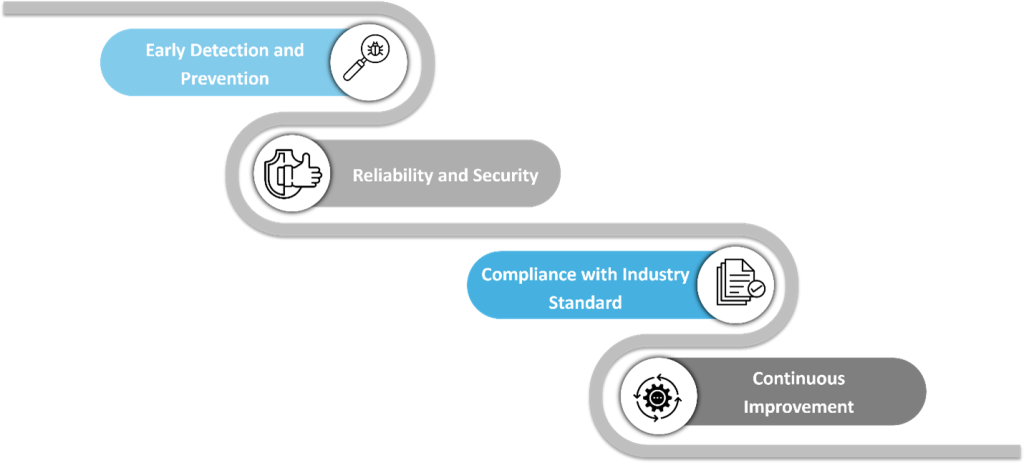
- Early Detection and Prevention:
- Catches defects early, saving time and cost.
- Prevents last-minute delays and project disruptions.
- Reliability and Security:
- Ensures consistent software performance and user trust.
- Identifies vulnerabilities in sensitive sectors like healthcare or finance.
- Compliance with Industry Standards:
- Ensures adherence to regulations, avoiding penalties or risks.
- Builds credibility with customers and stakeholders.
- Continuous Improvement:
- Encourages ongoing refinement and product enhancement.
- Keeps software competitive and aligned with market needs.
Prioritizing QA establishes the foundation for long-term success by ensuring consistency, performance, and user satisfaction.
QA Software Testing Process
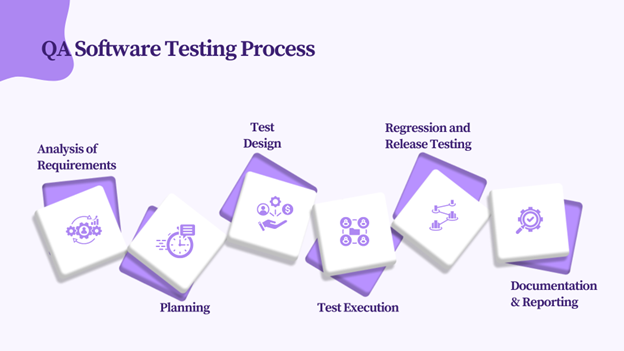
The QA testing process systematically ensures software reliability and alignment with requirements. Here’s the step-by-step workflow:
- Requirement Analysis: Understand and review all requirements and testing conditions.
- Planning: Create a QA strategy defining scope, tools, and objectives.
- Test Design: Develop comprehensive test cases covering all possible user scenarios.
- Test Execution: Perform manual and automated tests, logging defects and outcomes.
- Regression and Release Testing: Validate new updates to ensure previous functionality remains stable.
- Documentation and Reporting: Maintain detailed reports for future reference and transparency.
Standard Activities in QA Software Testing
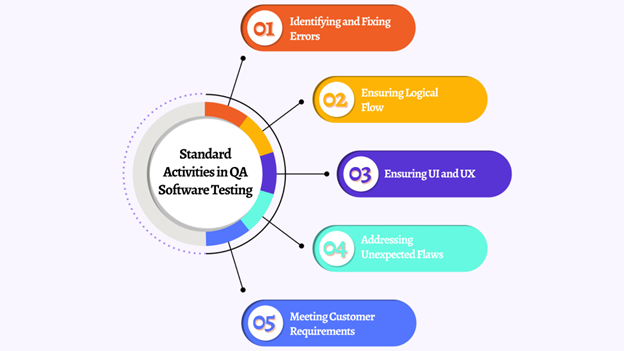
1. Identifying and Fixing Errors
- Code Review: Analyze code to identify potential bugs.
- Functional Testing: Validate that every feature behaves as expected.
- Bug Tracking: Document and resolve each defect efficiently.
2. Ensuring Logical Flow
- Flow Diagram: Map user journeys to confirm logical consistency.
- Scenario Testing: Validate typical user flows to ensure functionality aligns with expectations.
3. Ensuring UI and UX
- UI Testing: Ensure all visual and interactive elements function correctly.
- UX Testing: Verify that the interface is intuitive and user-friendly.
4. Addressing Unexpected Flaws
Unexpected flaws require rapid detection and resolution. For example, fixing an app crash caused by heavy user load ensures performance stability during peak times.
5. Meeting Customer Requirements
- Requirement Analysis: Align development goals with customer needs.
- Validation Testing: Confirm that all functionalities meet customer expectations.
Best Practices for QA Software Testing
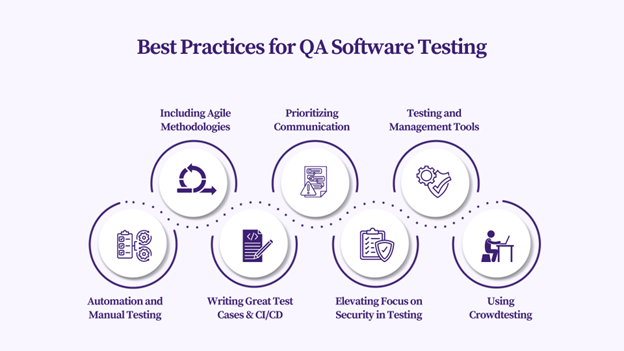
- Combine Test Automation and Manual Testing: Balance automation for repetitive tasks with manual testing for complex scenarios.
- Adopt Agile Methodologies: Use iterative testing and feedback loops to catch issues early.
- Write Comprehensive Test Cases: Cover typical and edge cases for complete validation.
- Integrate Continuous Integration (CI) and Continuous Delivery (CD): Enable immediate feedback and faster bug fixes.
- Prioritize Communication: Foster collaboration between QA, development, and stakeholders.
- Focus on Security: Include security checks throughout the QA process to prevent vulnerabilities.
- Select the Right Tools: Choose testing and management tools tailored to project needs.
- Use Crowd Testing: Test in real-world conditions with diverse users to uncover hidden issues.
Concluding Thoughts
Implementing QA best practices is essential for delivering software that meets user expectations and industry standards. By integrating QA throughout the development lifecycle, organizations can detect and fix issues early, reduce costs, and ensure long-term reliability.
Calsoft, a leading technology-first partner, offers end-to-end software product testing solutions using advanced tools and methodologies—driven by a commitment to quality engineering and innovation.