

Consider a scenario: Six months ago, an app had been developed which had 12 features. Now the product grew. Every new release means testing not only the changes but also everything that could have been affected by the change. Manually test is not realistic. The team that tried manually spent three days on regression testing alone and still missed two bugs.
The effective way to quickly and precisely check that new code changes have not affected the existing features is to use automated regression testing. It’s a technique that uses test scripts, plans, and workflows to speed up and improve the testing process.
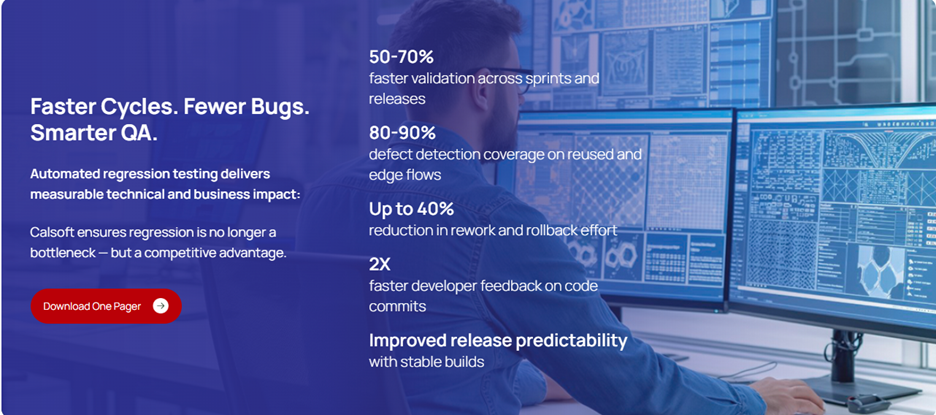
Automation accelerates regression testing and realizes large test coverage, at a lower cost compared to manual regression testing. Calsoft helps QA teams shift from script-heavy testing to impact-driven, sustainable regression automation aligned with release velocity. Calsoft's Automated Regression Testing solution, powered by CalTIA (Calsoft Test Intelligence & Automation) restructures this dynamic entirely, reducing validation time by up to 70% while improving defect detection coverage.
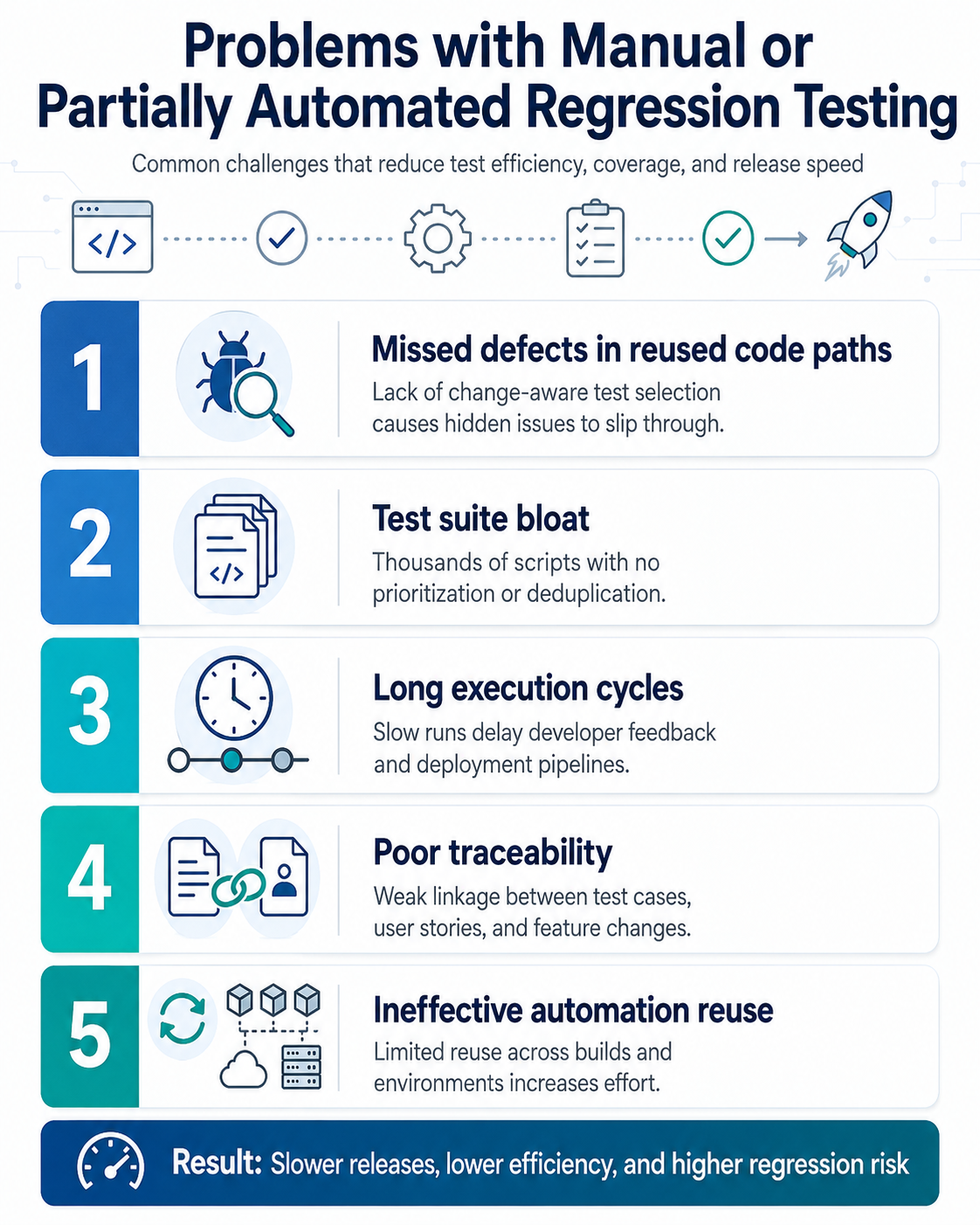
The Problem: Regression as a release bottleneck
The Problem: Regression as a release bottleneck Manual or partially automated regression testing fails to keep up with agile sprints and CI/CD pipelines.
Read the blog to gain more insights: 5 Steps to Improve Your QA Testing Processes
CalTIA: Intelligence-driven regression automation
Calsoft designs modular, reusable, and scalable regression test suites that fit your current and future SDLC needs. Calsoft ensures regression is not a bottleneck but a competitive advantage.
CalTIA is a regression intelligence framework built for scale. It combines test impact analysis and dynamic test prioritization into a unified pipeline.
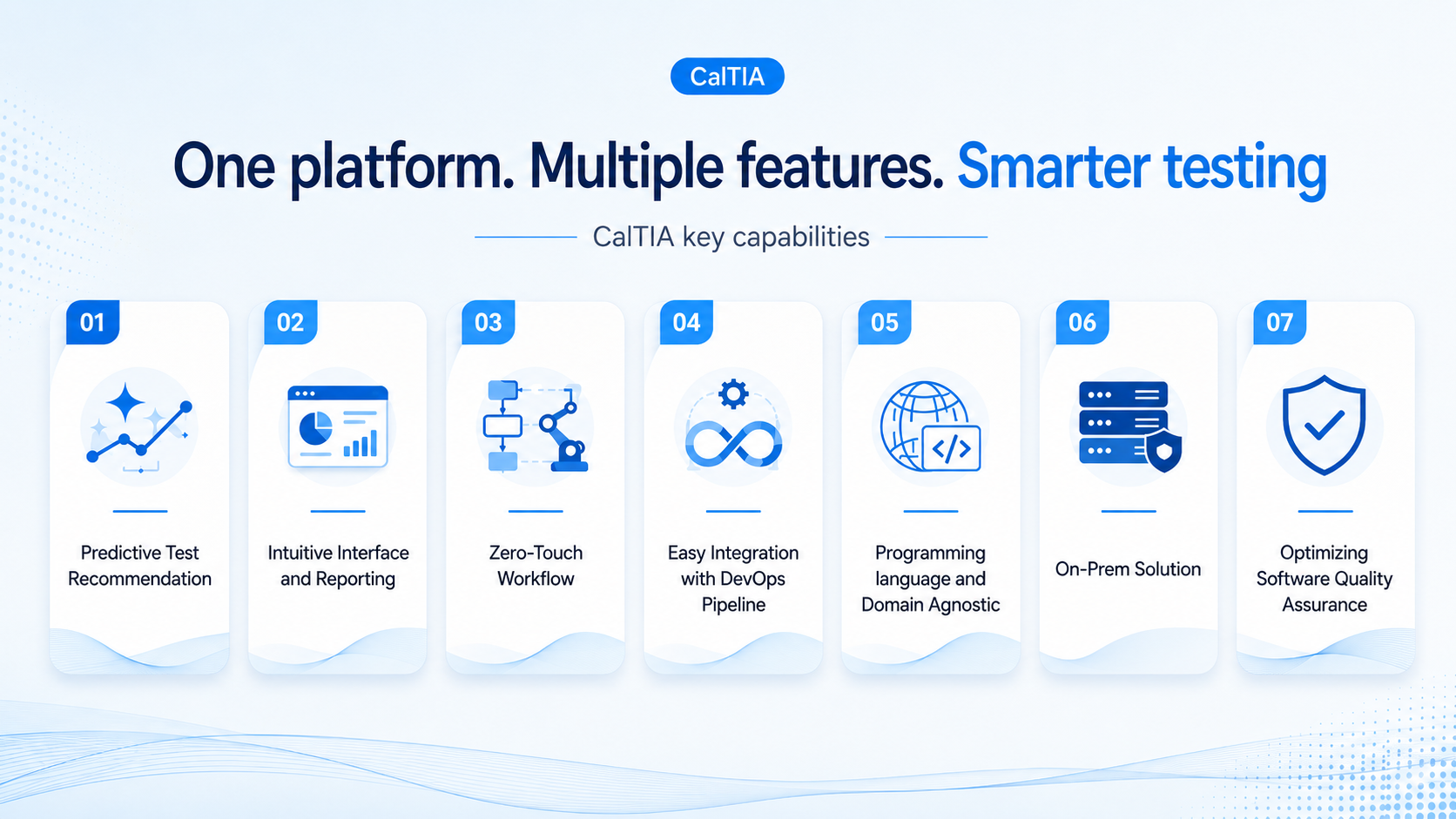
Core Technical Capabilities:
- Intelligently selects the most relevant tests based on code changes using predictive test analytics
- Executes essential test subsets, reducing regression time
- Ensure efficient and optimized testing cycles
- Accelerates release cycles and lowers infrastructure costs with automated regression testing

Key Use Cases
CalTIA is particularly effective for:
- SaaS platforms with multi-tenant architectures and high-frequency releases
- ISVs re-architecting monoliths into microservices requiring regression reuse
- FinTech applications with strict regulatory compliance and repeatability requirements
- Retail and eCommerce workflows requiring cross-browser and cross-device coverage
- Enterprises adopting CI/CD pipelines needing automated quality gates before every deploy

How Calsoft Engages: 5-Step Onboarding Model
Calsoft follows a structured, plug-and-scale approach to regression automation:
- Step 1 — Current Suite Assessment: Audit existing scripts, tools, and coverage gaps. Output: Regression Gap Report.
- Step 2 — Test Impact & Coverage Mapping: Analyse change vs. coverage using Git insights and static analysis.
- Step 3 — Framework Setup & Optimization: Implement CI/CD hooks, modular templates, and parallel execution.
- Step 4 — Pilot Run & Benchmarking: Execute targeted regression packs, track flakiness and execution savings.
- Step 5 — Enterprise Rollout & Maintenance Playbook: Governance, dashboards, change alerts, and suite extension SOP.
In summary
CalTIA transforms regression from a slow, script-heavy testing into a precision-targeted, CI/CD-native intelligence layer. The test impact analysis to avoid redundant test runs and maintain traceability to feature changes.
Ready to cut your validation time by up to 70%? Talk to Calsoft's testing experts