

Retailers are managing more complexity than ever. Demand changes quickly, customer expectations are higher, and operations must stay efficient across stores, warehouses, and digital channels. These pressures are not new, but the scale is harder to manage. Teams need to act faster, use more data, and reduce decision delays.
AI is helping by improving how retail teams work. It supports tasks that used to take hours or required coordination across departments. These include stock updates, support responses, product tagging, and promotion planning. The tools are embedded in existing workflows. AI helps teams use data they already have. This includes inventory logs, purchase history, returns, and customer service chats. With AI, teams get suggestions or alerts instead of pulling reports or checking dashboards. This saves time and makes action easier.
Most adoption begins in small pilots. Once tools show value, teams scale usage with guardrails. The impact is not from full transformation, but from steady improvements across retail processes.
Download industry report: AI in Retail 2026 | Top 10 real-world applications
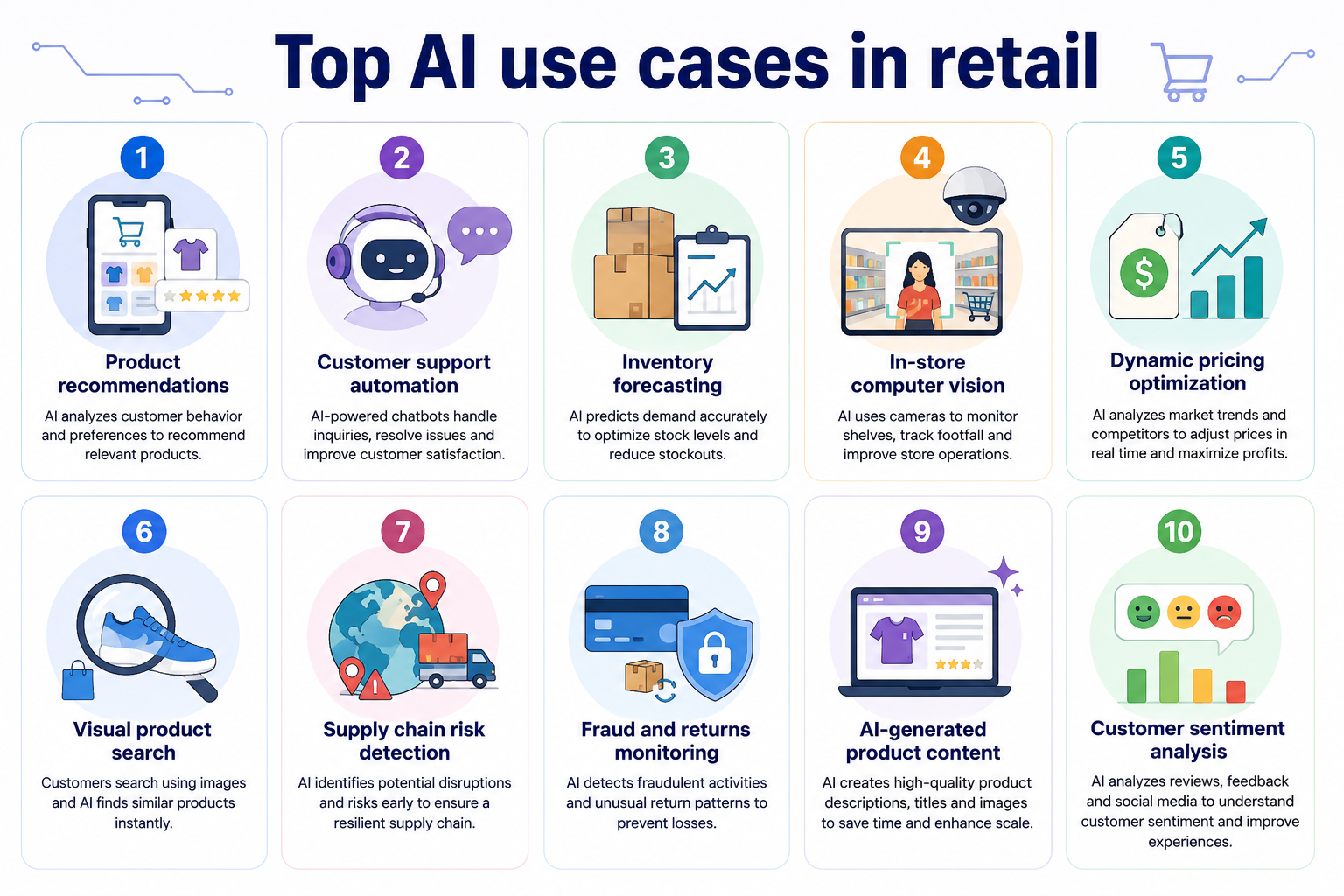
Top 10 AI use cases in retail
This section highlights the most impactful AI use cases in retail, showing how technologies like predictive analytics, automation, and computer vision are applied across customer experience, operations, and supply chain functions.
Read Blog | Data-Driven Retail Transformation
These are the most common ways retail teams use AI in 2026:
- Product recommendations: AI systems surface relevant products by combining browsing behavior, availability, and recent demand signals.
- Customer support automation: Routine questions are resolved through AI-driven responses, reducing wait times and agent workload.
- Inventory forecasting: Demand patterns are analyzed continuously to guide replenishment and reduce stock imbalances.
- In-store computer vision: Camera-based models track movement and shelf interaction to support layout and loss prevention decisions.
- Dynamic pricing optimization: Prices are adjusted using inputs such as inventory levels, seasonality, and competitive signals.
- Visual product search: Shoppers find similar items by uploading images instead of relying on text queries.
- Supply chain risk detection: Early warnings are generated when delays or disruptions emerge from suppliers or logistics routes.
- Fraud and returns monitoring: Transaction behavior is evaluated to flag unusual activity before losses escalate.
- AI-generated product content: Listings and descriptions are created at scale using structured catalog and attribute data.
- Customer sentiment analysis: Feedback from reviews and service interactions is analyzed to identify emerging issues and preferences.
Each of these use cases is live in enterprise teams. They require structured data, responsible access, and team alignment. But once in place, they support repeatable and scalable improvement in everyday operations.
Download case study: AI-Driven Price Optimization for Retail Chain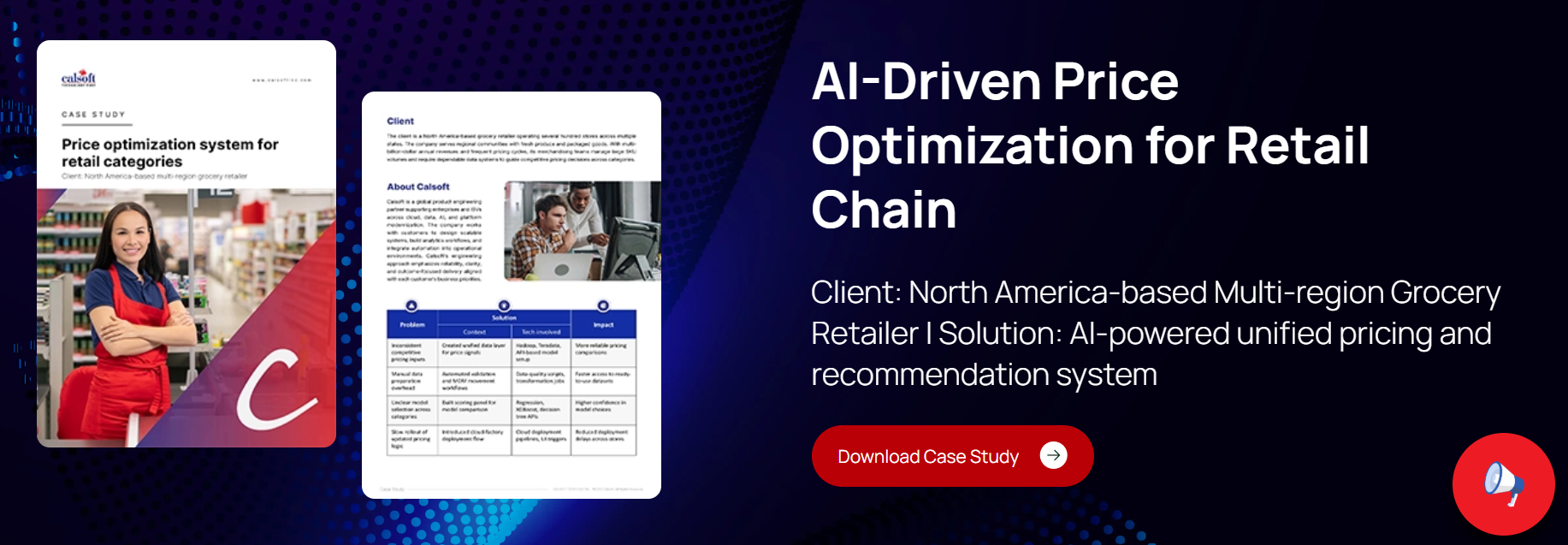
Future of AI in retail
AI in retail will move from single tasks to connected systems. Teams will not just automate steps — they will link pricing, supply, and service to respond faster.
Inventory decisions will update pricing and promotions in near real time. Customer feedback will guide changes in content, layout, or offer strategy. AI tools will bridge signals across functions so that action is faster and better aligned.
In stores, vision systems will provide more than analytics. They will support layout design, staffing decisions, and planogram checks. AI will help managers adjust based on actual behavior, not just footfall or sales data. Support tools will move from deflection to resolution. AI will guide users through issues based on their product, context, and history. This will lower the effort for both customers and agents.
Retailers will also tune models for their own business. Internal teams will control how AI uses products, support, and policy data. These models will stay in-house, with clear rules and usage tracking.
Governance will grow. Teams will monitor AI like any system - checking logs, reviewing actions, and refining rules. The goal is not scale. It is control, accuracy, and trust. These shifts are not major changes. They build on what retail teams already do but with faster response and clearer direction.
FAQs
Q1: How is AI changing retail workflows in 2026?
AI is automating repetitive tasks like inventory tracking, order processing, and customer support, freeing retail teams to focus on decisions that need a human touch.
Q2: How does AI help retailers make better decisions?
AI analyses real-time sales data, customer behaviour, and supply chain signals to give retailers accurate, timely insights, so decisions are based on facts.
Q3: Which retail operations benefit most from AI in 2026?
Inventory management, demand forecasting, personalized marketing, and checkout automation are seeing the biggest impact, reducing costs and improving the customer experience at the same time.